

Marionette Lines typically become more noticeable during facial movement or with changes in lighting. They can develop due to a combination of skin-related and structural changes rather than one single factor. Contributing factors can include:
- Reduced collagen and elastin
- Skin laxity and thinning over time
- Gradual loss of facial volume and structural support
- Repetitive muscle movement, particularly the muscles that pull the corners of the mouth downward
- Changes in fat pad position and distribution in the lower face
- Jowl formation and jawline changes
- Individual anatomy and genetic predisposition
Treatment Options
Many of the above contributing factors often occur simultaneously, so treatment planning typically addresses the entire lower face rather than focusing on the line itself. There are several treatments for Marionette Lines and the recommended treatment is determined by skin quality, line severity and overall facial balance. Often, we recommend a combination of treatments.
Skin Boosters
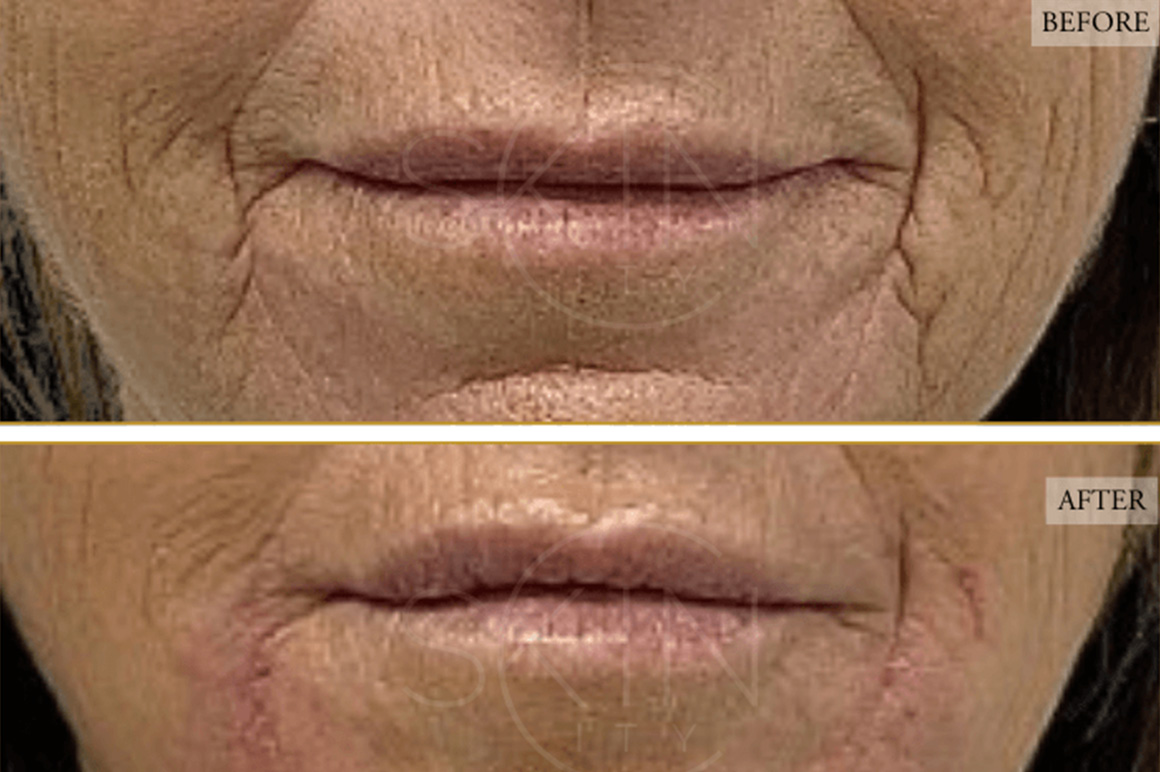
If an individual’s Marionette Lines are subtle, we may recommend Skin Boosters to support hydration and overall skin quality. Skin Boosters may help soften the appearance of fine lines and support the skin’s resilience; however, they do not add structure to the area.
Skin Boosters contain hydrating and bio-stimulating ingredients, which, when delivered to the skin, address light reflection and skin texture. This may make Marionette Lines appear more subtle, particularly when they are shallow.
Polynucleotides
When skin quality is contributing to marionette lines, we may suggest polynucleotide-based treatments, such as Rejuran. Rejuran contains DNA fragments from salmon that support the skin’s natural repair process. Typically, this treatment is incorporated into a broader plan, not recommended on its own. When used to address Marionette Lines and the surrounding area, it can help with:
- Collagen stimulation
A reduction in inflammation-related pigmentation
Overall changes in skin quality
Polynucleotides & Dry Skin Needling
Polynucleotide-based treatments are often combined with dry skin needling to optimise outcomes. Dry needling is especially useful for individuals with fine lines, early skin laxity or textural changes that contribute to Marionette Lines.
Dry Skin Needling (medical-grade microneedling) uses fine needles to create controlled microchannels in the skin. These micro-injuries trigger the body’s natural wound healing response. When activated, this leads to more cellular activity and collagen production.
When Skin Needling is performed at appropriate depths, the treatment reaches the dermis, where collagen and elastin are produced. Reaching the dermis is necessary for achieving significant structural changes.
When treating Marionette Lines, Dry Skin Needling offers the following benefits:
- addresses texture and firmness
- promotes collagen and elastin production
- supports localised skin contraction
- increases absorption and effectiveness of adjunct treatments such as polynucleotides
A series of treatments is usually recommended, spaced four weeks apart, depending on the individual’s response.
Volumising Treatments
If an individual has more pronounced Marionette Lines, we may suggest Volumising Treatments as part of a wider lower-face treatment plan. The volumising product is not placed in the line in isolation. Instead, a structured approach is taken, with the product sometimes placed in the following areas to create a more balanced outcome:
- Slightly in front of the Marionette Line to minimise the appearance of shadowing
- Around the chin area to support a more even transition between adjacent areas
- In some cases, the lower jaw line, when contour changes or early jowl formation are present
Volumising products are gel-based products that contain molecules that attract water. When placed at specific depths in targeted areas, they can provide structural support. There are various products available and the appropriate selection and volume is determined by factors such as individual anatomy, tissue characteristics and overall facial proportions.
Volumising treatment is typically performed in stages. We conservatively place small amounts of product, with time allowed for integration before reassessing the area. We only add more product when it is appropriate. This approach supports a controlled treatment process and reduces the likelihood of overcorrection.
Your Consultation
Before commencing treatment for Marionette Lines, patients must have a comprehensive face-to-face consultation with one of our treating cosmetic nurses. This consultation covers the following:
- detailed facial assessment
- review of medical history
- discussion regarding treatment suitability and available options
- discussion regarding potential risks and clinical considerations
If a treatment requiring prescription-only products is recommended, patients must also have a consultation with one of our prescribing doctors. This can be conducted via telehealth and includes confirmation of medical suitability, discussion of risks and informed consent.
Following these consultations, an individualised treatment plan is developed, which may involve staged or combination treatments.
Forearm Prick Test
When Volumising or Skin Booster treatments containing a synthetic complex sugar compound are recommended, we may recommend a forearm prick test. A small amount of dissolving agent is placed on the forearm, then observed for any localised reaction. If the cosmetic nurse has ensured that no abnormal response has occurred, treatment can proceed.
The forearm prick test is a precautionary step that helps assess how an individual may respond to the dissolving agent. Sometimes, dissolving agents are required in planned situations (e.g. adjusting or removing previously placed product) or in urgent circumstances (e.g. managing vascular compromise).
Product reactions are uncommon; however, this process is carried out to minimise the risk of a severe allergic reaction, such as anaphylaxis. Anaphylaxis is a rare but serious medical condition that may affect breathing and requires urgent medical attention.
Patients previously exposed to dissolving agents without an adverse reaction may be considered, although we may still recommend a forearm prick test as an additional precaution.
Imaging Assessment
If patients have had volumising treatments performed at other clinics, we may recommend additional assessment before proceeding with treatment. Sometimes, when clinically indicated, we may recommend imaging such as Magnetic Resonance Imaging (MRI) and/or ultrasound.
This assessment provides a clear understanding of existing product placement, distribution and overall soft-tissue condition. This can help identify factors such as fluid retention, residual product, migration, fibrosis or other tissue changes that can influence treatment planning.
These investigations are considered on an individual basis, forming part of a structured approach to ensure appropriate clinical decision-making, patient safety and informed treatment planning.
Treatment Comfort
At Bella Plastic Surgery, we offer several comfort measures to optimise your comfort during treatment. These measures are typically tailored to the areas being treated and individual sensitivity. We usually apply a topical anaesthetic, allowing adequate time to take effect, before commencing the procedure.
We may also use cooling methods, such as ice packs, to support comfort and minimise the risk of swelling.
Additionally, some volumising products contain a local anaesthetic, which helps optimise comfort during the procedure.
Throughout the treatment, your cosmetic nurse will monitor your response and communicate with you to ensure the treatment is performed in a controlled and appropriate manner.
After-Care & Recovery
Following treatment, patients are given verbal and written after-care instructions. They will also receive a treatment record outlining the areas treated and products used.
Immediately after treatment, patients typically experience:
- Redness
- Swelling
- Bruising
- Tenderness
The above responses are usually more noticeable within the first day or two and may increase before settling. By days three to four, swelling usually begins to reduce. The most noticeable effects settle around one week. However, some areas may take longer, depending on the individual’s healing response.
Post-treatment monitoring and follow-up will be arranged. This may include sending an image to our clinic within the first few hours post-treatment and a review three to fourweeks later once the treated area has settled.
Cost
The cost of treatment for Marionette Lines depends on the recommended treatments, the volume of product required and whether a staged or combination approach is recommended. Following your initial consultation, a personalised treatment plan will be created, including all associated costs, so you can make an informed decision before proceeding.
Risks & Complications
As with all nonsurgical cosmetic procedures, Marionette Line treatments carry risk and outcomes vary between individuals. Side effects may include infection, bruising, swelling, product migration, changes in facial movement and vascular compromise. Rare but serious complications may occur. These include vascular events or visual disturbance.
All risks will be discussed in detail during a face-to-face consultation with both the treating cosmetic nurse and prescribing doctor before commencing treatment. For more information, please see our Risks and Complications page.
