

Procedure gallery View patient results
What is Breast Reduction Surgery?
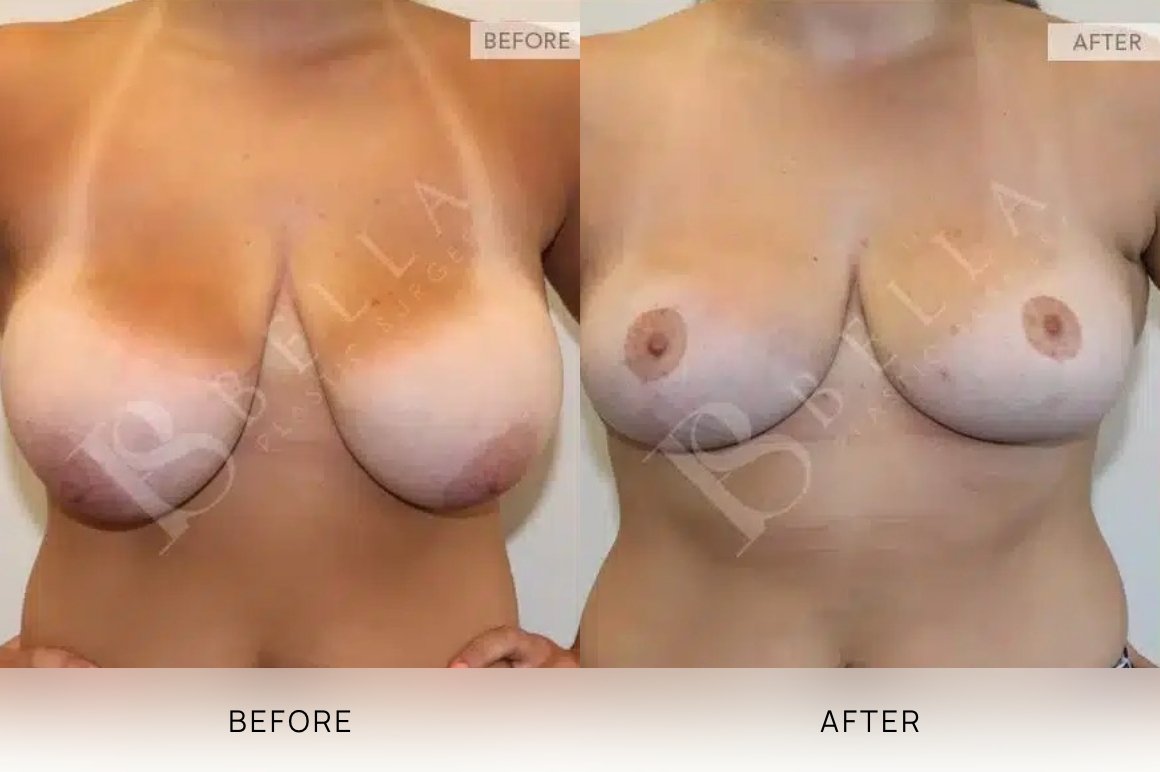
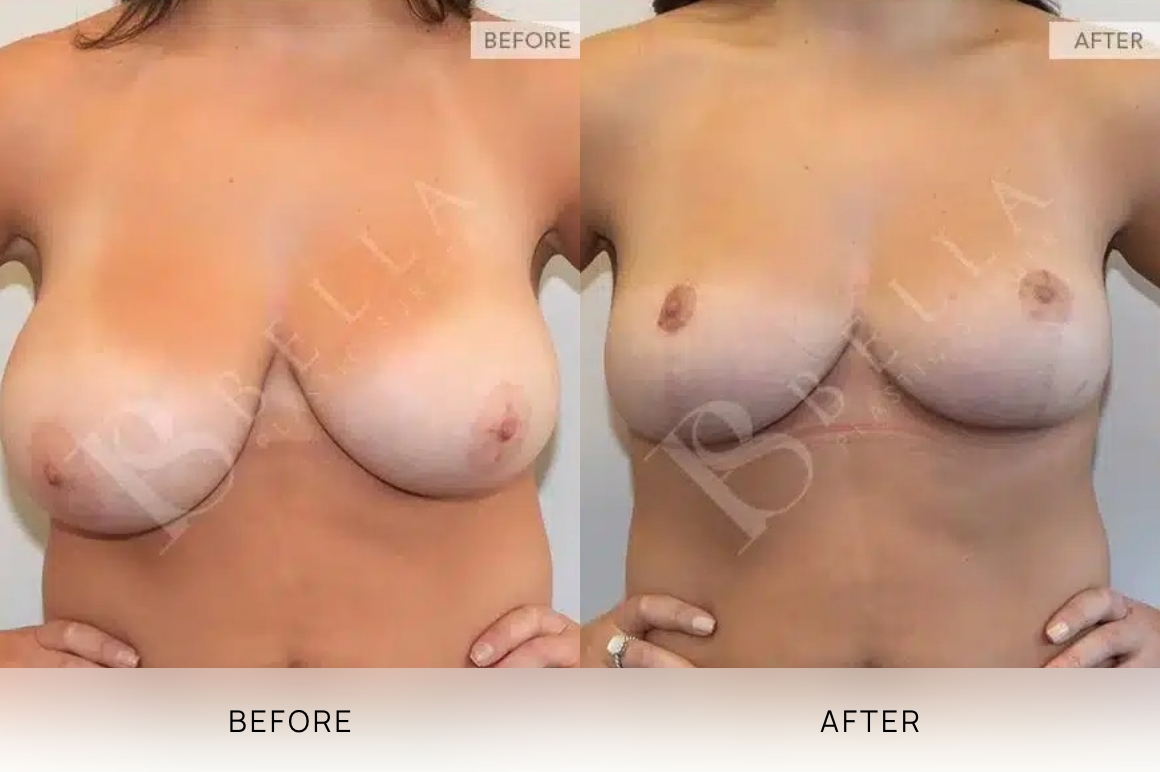
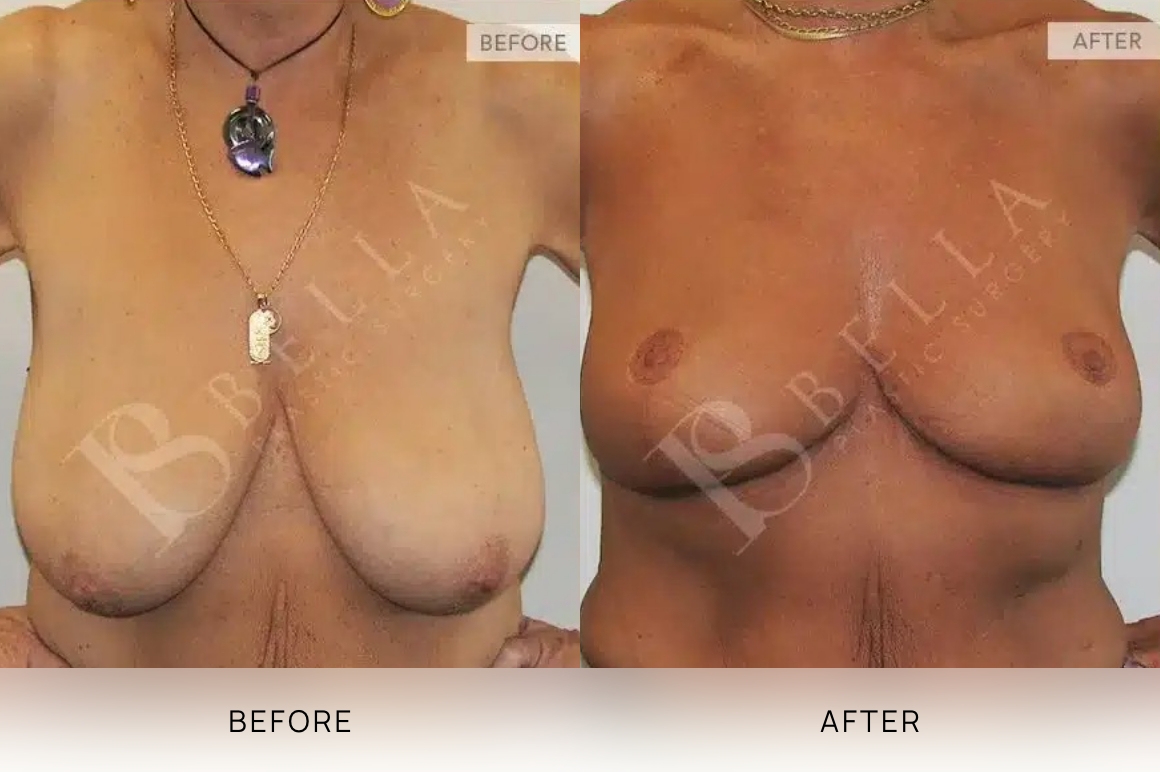
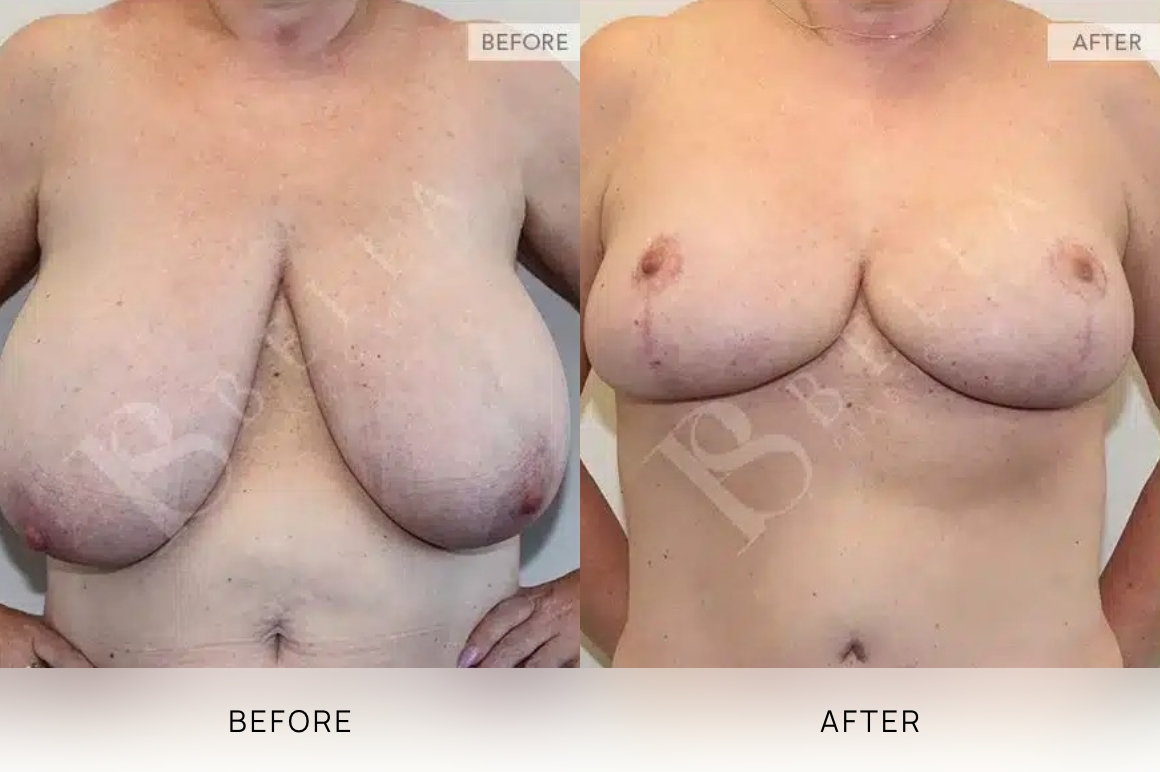
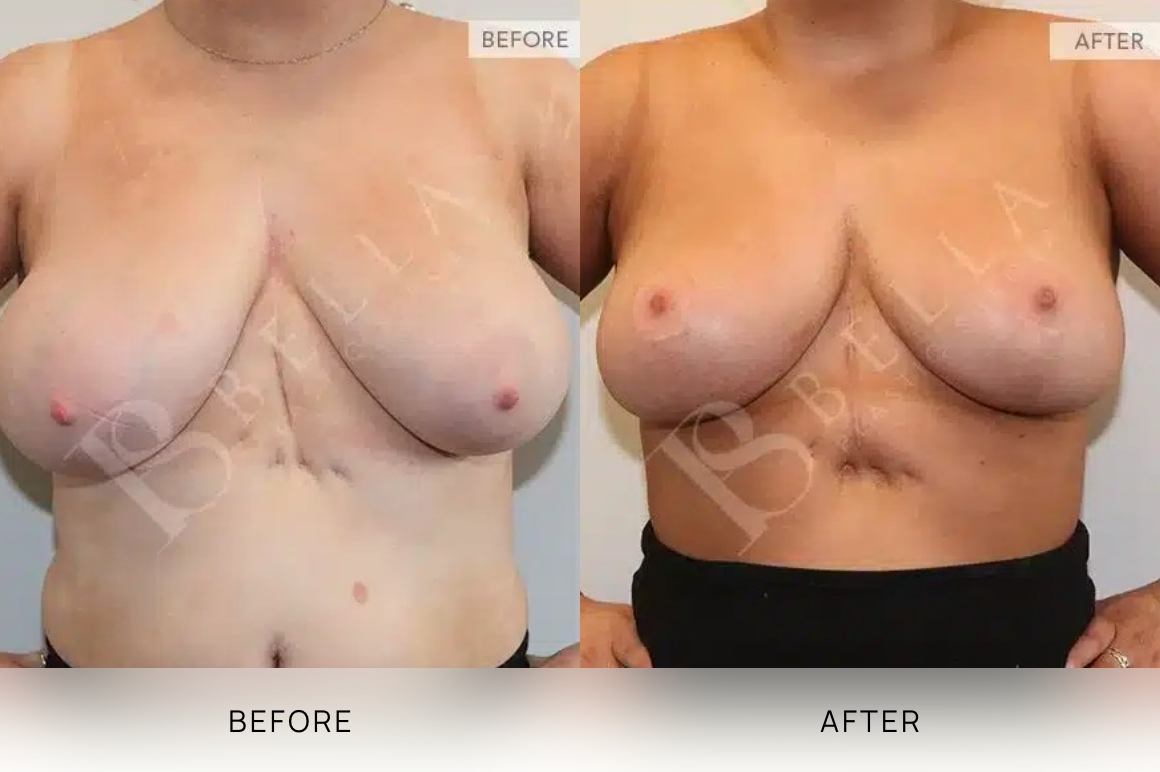
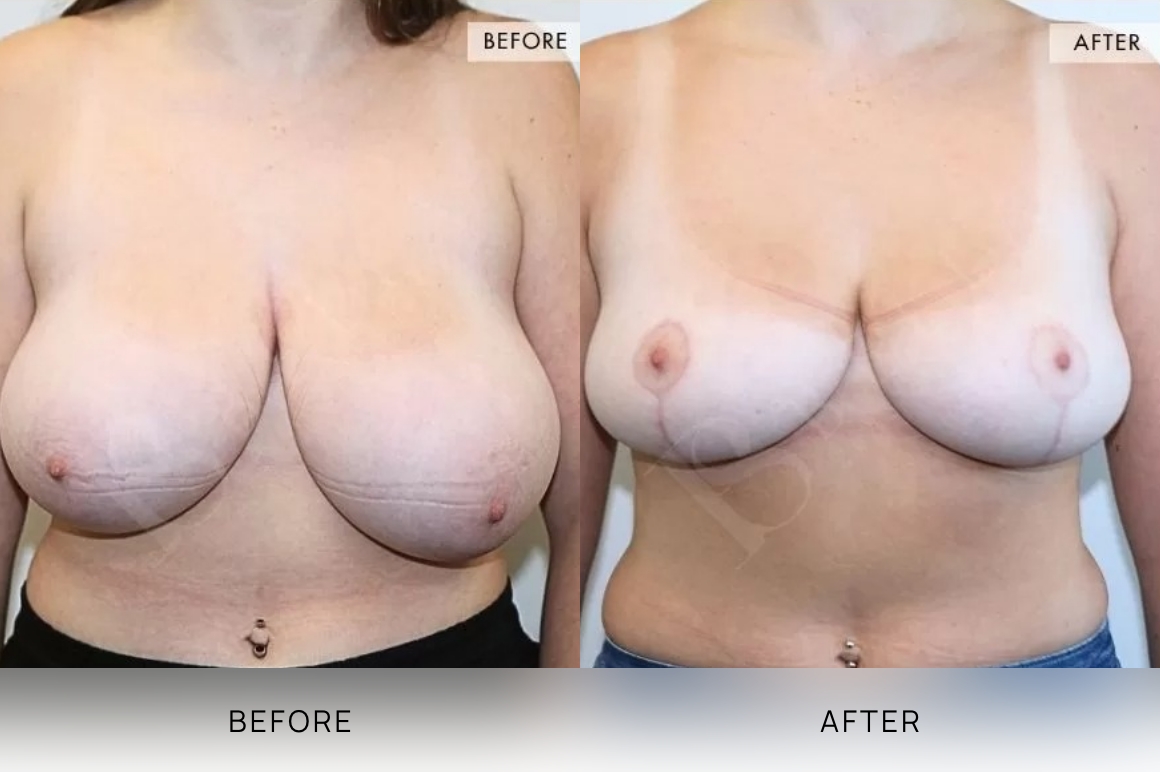
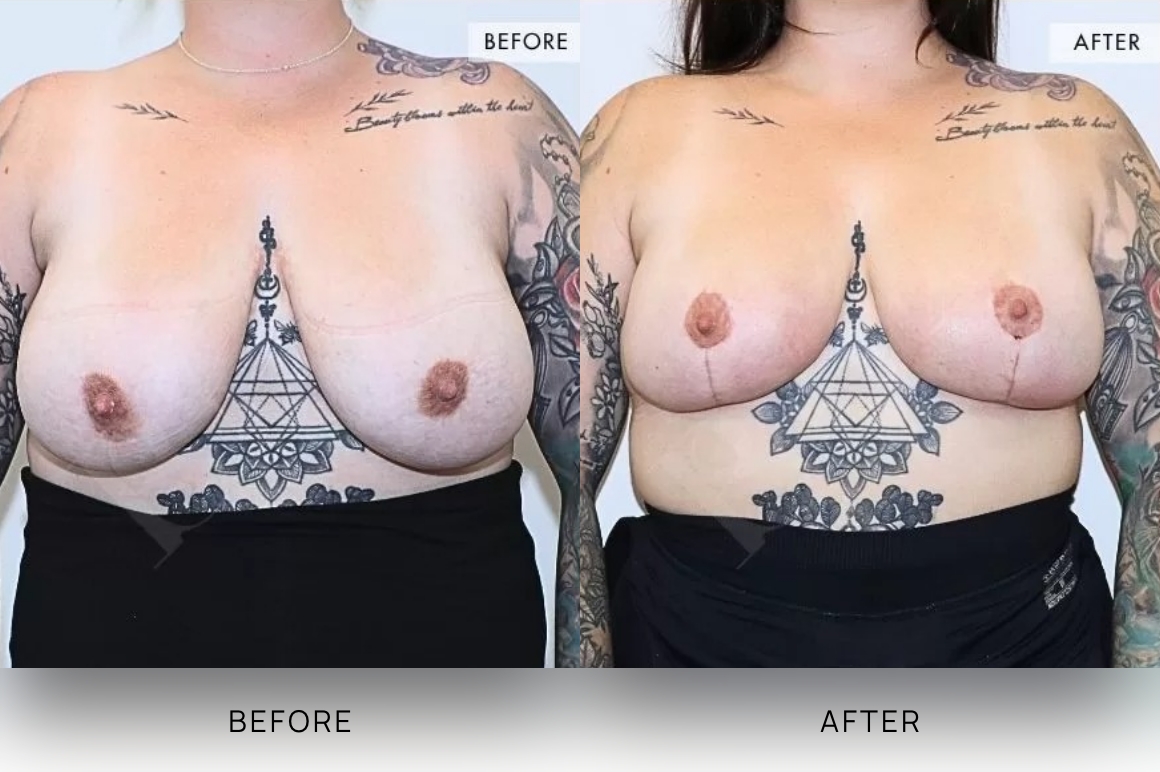
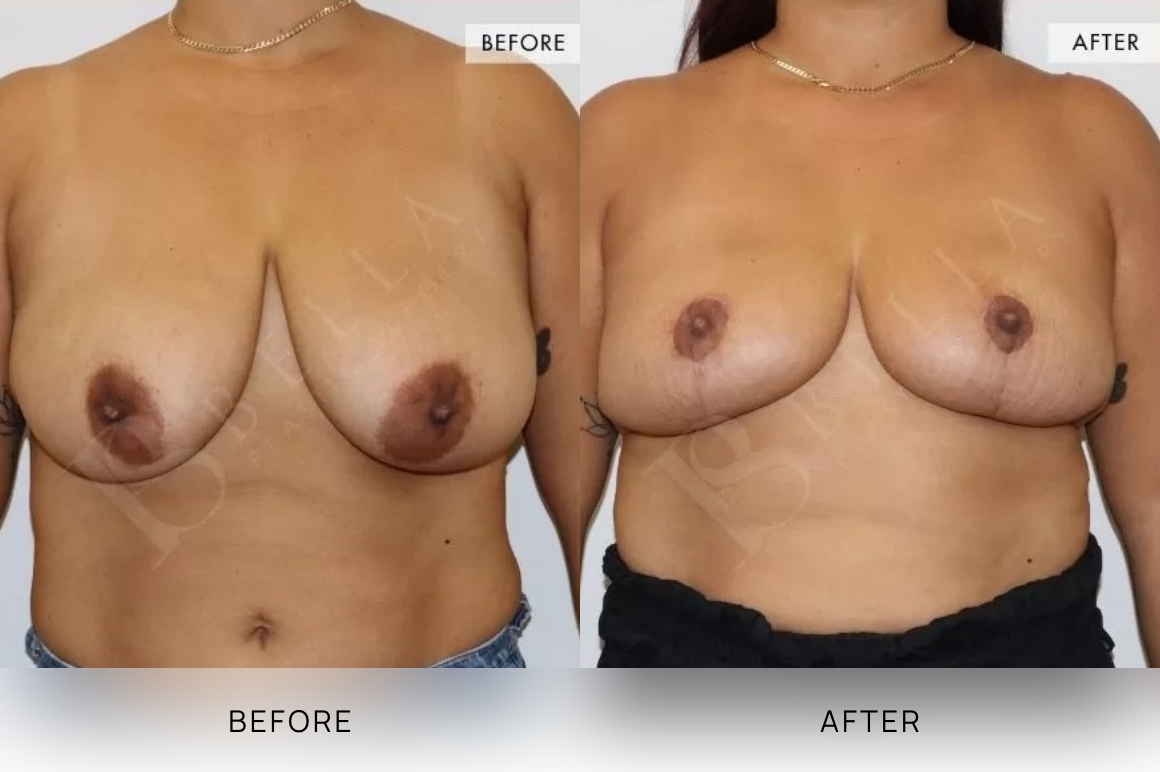
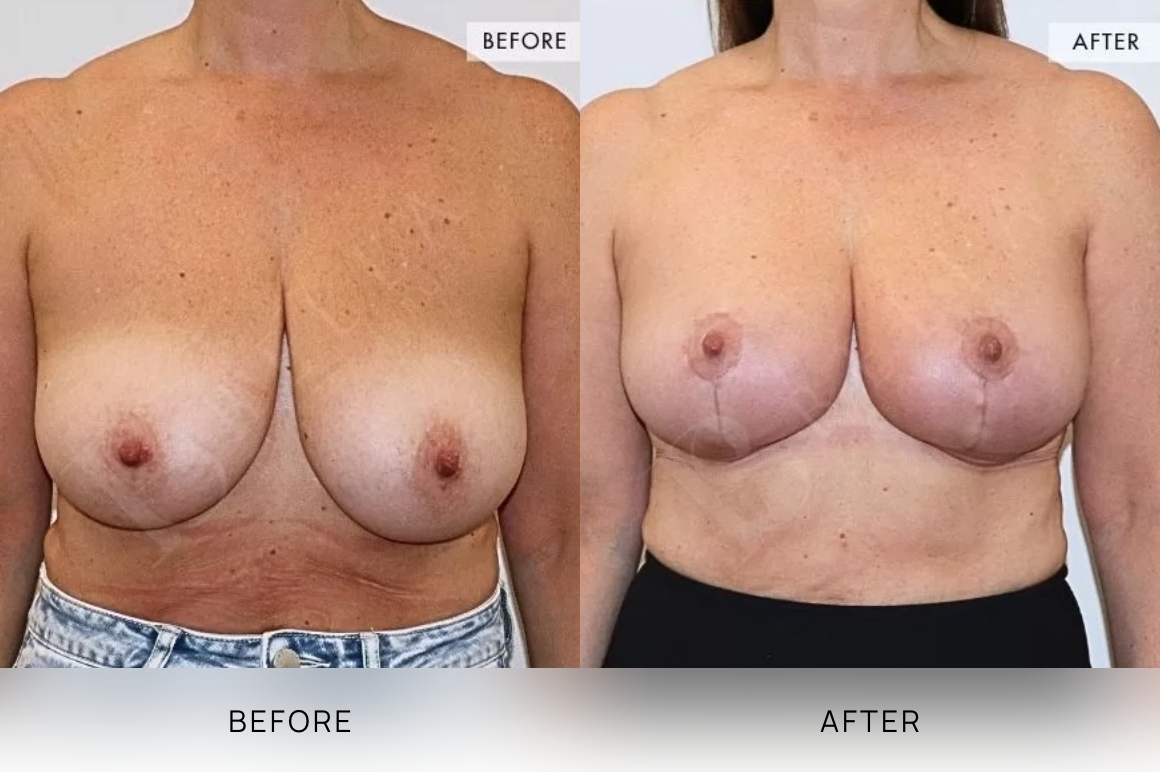
Breast Reduction surgery, also known as Reduction Mammoplasty, is a surgical procedure that helps patients eliminate pain caused by large breasts and achieve their desired breast appearance. The procedure is performed under general anaesthesia and can take several hours. During the procedure, excess breast tissue and skin are removed while the breast is lifted and reshaped.
Benefits of Breast Reduction Surgery
Most women undergo Breast Reduction surgery for health or medical reasons. By decreasing the size and weight of your breasts, you may experience the following benefits:
- Improved size, shape and symmetry
- Improved posture and decrease in spinal pain – particularly in the back, neck and shoulders
- An elimination of permanent indentation marks on the shoulders due to wearing a thick supportive bra carrying heavy breasts
- No more pain in the breast tissue
- An ability to enjoy sports and physical activities again
- Balanced breast shape–if one breast was larger than the other
- Reduced skin irritation–now that heavy breasts have been reduced in size and volume
How is Breast Reduction Surgery Performed?
Breast Reduction surgery is performed in hospital under general anaesthesia. Dr Dona uses various techniques, depending on the size and shape of your breasts, the amount of skin tissue that needs to be removed, the quality of the skin and positioning of the nipples and areolas – and your personal objectives. With these issues in mind, Dr Dona will recommend one of the following techniques:
Anchor Scar Technique
The anchor-shaped scar technique is the most common technique used for Breast Reduction. This procedure is suitable for most moderate to large reductions. It involves incisions around the breast that create an anchor-like Breast Reduction scar. This includes circumferential scars around the areola, a vertical scar down the lower edge of the areola to the breast fold and then horizontally along the natural curve of the breast. Once all skin and tissue are removed, the areola and nipple are lifted to a higher position and then stitched to reshape the breast.
Lollipop Scar Technique (Vertical Lift)
As the name suggests, this procedure leaves patients with a lollipop-like scar. An incision is made around the areola and a vertical incision is created down to the breast fold. This procedure is best suited for mild to moderate breast reductions.
Circumareolar Scar Technique (Doughnut Lift)
This technique results in one scar around the areola. However, it can leave the breast looking flat and doesn’t allow for a significant lift of the breast tissue. This technique (aka the Benelli or Doughnut Technique) is best suited for those wanting minimal reductions. Hence, it is mainly used in small Breast Lifts that don’t require any breast volume or weight reduction.
A word on nipples and areolas…
The nipples and areolas remain attached to their blood and nerve supply while being repositioned in almost all breast reduction procedures. However, if the breasts are extremely large and the areolas and nipples are near waist level, then they may need to be surgically removed and grafted into the new position.
This should only be considered by women who no longer want to breastfeed, as the procedure will result in an inability to do so, along with a change in nipple appearance and sensation.
Your Initial Breast Reduction Consultation With Dr Dona
Your Initial Consultation with Dr Dona will be held at our Sydney plastic surgery clinic. During this time, you can discuss your concerns and objectives. Dr Dona will also assess your medical history, including all medications you are taking. Then, he’ll perform a physical examination before considering your objectives and advising you of your options. Dr Dona will discuss the Breast Reduction procedure, including the usual post-operative course and potential risks. You’ll also have the opportunity to ask any questions during this time.
Breast Reduction Surgery: What to Expect on the Day
The hospital will call you the day before your surgery to let you know when to arrive at the hospital, along with any presurgical requirements, such as when to begin fasting. Once you arrive at the hospital, you’ll check in with the reception staff and then be taken to the presurgical waiting area, where you will be officially checked in for your surgery. Then, the theatre staff will make you as comfortable as possible while waiting to proceed to the operating room.
Before your procedure, you’ll be taken into the theatre anaesthetic bay. Here, you’ll meet your anaesthetist, who will discuss issues around your anaesthetic and medications you’ll receive after surgery to keep you as comfortable as possible. You’ll also see Dr Dona, who will make his tentative surgical markings on you, have a final chat about the surgery and remind you what to expect when you wake up.
What do Breast Reduction scars look like?
There is a variety of techniques used in Breast Reduction surgery, so not all Breast Reduction scars are the same. The most common technique for Breast Reduction (for women seeking moderate to large reductions) is the Anchor Scar Technique. This leaves the patient with a scar that looks like an anchor. There is a circle around the areola, a vertical line that travels from the areola to the breast fold, and a horizontal scar that sits in the breast fold. If women are seeking mild-to-moderate breast reductions, often, the lollipop scar technique is used, leaving them with a scar that looks like a lollipop. There is a circle around the areola and a vertical line travelling down towards the breast fold. Finally, there is the Circumareolar Scar Technique for women seeking only a small breast lift. The scar is simply a thin line around the areolas.
What is the difference between a Breast Reduction, Breast Lift and Breast Augmentation?
Typically, a Breast Reduction minimises the size and volume of the breast and lifts the breasts so that they are lighter, sit higher (lifted) and are more in proportion to the rest of the body. The results of this procedure also reduce or eradicate medical issues such as back pain or skin irritation. Every Breast Reduction provides a Breast Lift, but Breast Lifts are not Breast Reductions. A Breast Lift is an operation that is performed to lift and reshape the breasts without reducing their size. Breast Lift surgery typically has the same scar patterns as a Breast Reduction.
Breast Augmentation is aimed at enlarging the size of the breasts using silicone implants. However, we occasionally perform a BIO Lift™ (Breast Implant Only Lift) capable of lifting the breast without its typical trademark scars. Instead, an implant is inserted under the breast fold, lifting the breast without additional incisions. Therefore, it’s often called a “Scarless Breast Lift”.

Dr Eddy Dona is a highly experienced specialist plastic surgeon who has dedicated much of his profession to Breast Reduction.
When considering Breast Reduction, it’s vital you consider your options and do your research carefully. Not all surgeons are equal – or have the same level of expertise and experience.
Breast Reduction Recovery Instructions
Before your surgery
When You Wake Up From Surgery
Pain After Breast Reduction Surgery
Swelling After Breast Reduction Surgery
Showering After Breast Reduction Surgery
Sleeping After Breast Reduction Surgery
Returning to Normal Activities After Breast Reduction Surgery
Bras & Clothing After Breast Reduction Surgery
Sexual Activity After Breast Reduction Surgery
Reducing the Risk of Blood Clots (Dvts) After Breast Reduction Surgery
Diet & Bowel Habits After Breast Reduction Surgery
Breast Reduction: Potential Complications
All surgical procedures carry risks. To read about more general risks and complications, please go here.
While the chances of complications from general anaesthesia are very slim, you must understand that potential problems like the following can occur:
- Allergic reaction – from mild to life-threatening
- Anaesthesia issues – potentially affecting your lungs, heart or causing a stroke
- Bleeding – early or late
- Clots
- Deep vein clots – these can potentially spread to the lungs and be life-threatening. We perform several activities during and after surgery to help minimise the risk of this occurring.
- Superficial vein clots – a complication of the cannula or drip that is placed in your vein
- Death – although the chances of death are exceedingly rare, any of the issues listed here can result in this surgical complication.
- Wound problems – for example, infection and breakdown
NB: The above Breast Reduction potential complications are typical for any operation; however, some procedures and patients have an increased risk of developing them.
Complications specific to Breast Reduction Surgery may include:
- Asymmetry of breast size and shape – all breasts have some slight asymmetry. Those with significant asymmetry issues will be addressed during your surgery; however, slight ‘normal’ asymmetry will exist post-operatively.
- Bottoming out – due to the nature of the breast tissue and inherent heaviness, the natural breast tissue can continue to drop after surgery, resulting in very ‘bottom heavy’ breasts with nipples that sometimes point upwards.
- Breast tissue softness and ‘sagginess’ – while Breast Reduction surgery can reduce the shape and volume of your breast tissue, it can never make soft breast tissue firm. Further, soft breast tissue does not maintain its shape as well as firm breast tissue. Therefore, maintaining a fuller upper half of the breasts in these situations is generally not possible.
- Breast lumps – these are uncommon and likely caused by a small collection of blood or dead fat cells that are still healing. If lumps do occur, they generally resolve on their own over time.
- Excess skin – in extremely large breasts, excess breast tissue and skin sometimes remain under the armpits. These may warrant further surgery to improve the appearance.
- Inability to breastfeed – there is a reduced potential to breastfeed after Breast Reduction surgery.
- Loss of nipple and areola tissue – this is a rare occurrence when the nipple and areola lose blood supply. Reconstructive surgery can be performed at a later time to correct this issue. Smoking or chewing any nicotine product significantly increases the risk of this occurrence.
- Loss of sensation in the nipple and areola – if this occurs, it is usually temporary, with sensations typically returning over several months. In some cases (up to 10 %), the situation becomes permanent. Occasionally, the nipple sensation can become too sensitive and uncomfortable, and this can also be permanent.
- Scarring – all surgery leaves scarring and the scar itself can have an unpredictable healing response. We aim to provide the best possible scar that your genetics allow
How much does Breast Reduction surgery cost In Sydney?
The cost of Breast Reduction surgery is broken down in three ways:
- Complexity – will it take two hours or five?
- Hospital stay – will you need an overnight stay in hospital?
- Private Health Insurance – will your health insurance cover some of your hospital fees?
We understand that not being given a ballpark figure can be frustrating. Rest assured, after your Initial Consultation with Dr Dona, you’ll receive a breakdown of all costs and potential rebates from Medicare and your Private Health Insurance, if applicable.
