

What is Dermatosis Papulosa Nigra (DPN)?
Dermatosis Papulosa Nigra (DPN) is a common, chronic skin condition characterised by multiple small, brown-to-black, raised lesions. They often increase gradually over time, becoming more noticeable as more appear. While the exact cause of DPN is not known, it is understood that genetics plays a role as DPN often runs in families.
Laser Removal of DPN
At Bella Plastic Surgery, we use Medical Grade Laser technology to remove each DPN lesion at its base. Our pen-tipped Laser handpiece allows for controlled treatment of each lesion while minimising disruption to the surrounding skin.
Before treatment, we recommend that patients have a test patch to gauge the skin’s reaction. One or two lesions are removed, then the patient waits 4 to 6 weeks to assess how the skin heals. This test is essential, particularly because darker skin types are more prone to adverse healing responses, such as pigmentation changes or raised scarring.
If healing goes well, we can then proceed with full treatment.
Skin Cancer Assessment
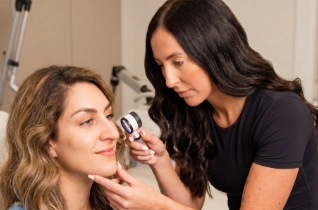
Before any Laser lesion removal, we always recommend undergoing a skin cancer assessment. As lesions are removed via Laser, the tissue is destroyed and cannot be sent to pathology. Therefore, histological testing (microscopic examination) is not possible after treatment. Even when a lesion has been assessed in-clinic and deemed benign, there is always a small risk that abnormal cells may have gone undetected. For this reason, an appropriate assessment before treatment is crucial.
Is Removal Permanent?
While we can remove all visible lesions, patients must understand that DPN is a chronic condition and we cannot prevent new lesions from forming. Therefore, treatment may be ongoing, with future appointments required if new lesions develop and should be treated as maintenance.
How Many Treatments Are Required?
Most lesions can be removed in one session. However, your treatment time will depend on how many lesions need to be removed and how the skin heals. Sometimes, a touch-up appointment is required. And if new lesions appear, further appointments may also be required.
Comfort during Treatment
Depending on the area and the number of lesions being treated, we may apply topical and/or local anaesthetic to ensure your comfort during treatment.
Treatment Time
The actual Laser removal of DPN lesions is quick. However, treatment time is usually about one hour. This allows time to complete all documentation, receive the treatment and discuss after-care.
Recovery
After Laser treatment, a small scab typically forms over each lesion. Mild swelling, redness and some clear or yellow fluid may be present for one to 2 weeks. By this time, the scabs will have fallen off, leaving a small pink mark which will remain for the coming months until the treated area has fully healed.
Follow-Up & After-Care
We recommend that all patients return to the clinic within four days of treatment so we can review the treated area and administer light-based therapy, which is designed to expedite healing. We often recommend additional light-based therapy sessions, depending on the individual and the stage of skin healing.
At-Home After-Care
Keep the treated area dry until the scabs naturally fall off. Avoid sun exposure for at least four weeks after treatment. Avoid rubbing, picking, or applying active skincare products (e.g., acids, retinol, or bleaching agents) for at least two weeks. You may wear make-up, once approved by your treating cosmetic nurse, who will also provide recommendations regarding suitable products.
Cost of Treatment
The cost of your Laser DPN removal will depend on the number and extent of lesions being treated, as these factors affect the time required for the procedure. Additionally, if further light-based therapy is recommended, this will also affect the cost. Therefore, a face-to-face consultation is required to determine pricing.
Potential Side-Effects & Risks
Side effects and risks for this procedure are relatively uncommon. However, they can include delayed healing, infection, pigmentation changes (lightening or darkening of the skin), crusting or blistering and scarring (including hypertrophic or keloid scarring).
