

What Causes Broken Capillaries?
Sometimes, small blood vessels in the skin become weakened or dilated, making them visible at the surface. Several contributing factors may cause this to occur, including:
- sun exposure
- skin trauma or irritation
- age-related changes in skin
- genetics
- inflammatory skin conditions or rosacea
- lifestyle factors such as smoking or alcohol consumption
Some (but not all) Broken Capillaries can be treated with Laser. Suitability depends on factors such as the location, size and depth of the blood vessel.
Laser Treatment for Broken Capillaries
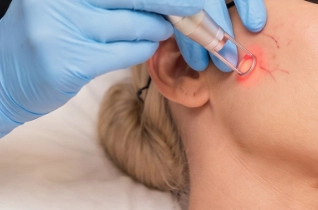
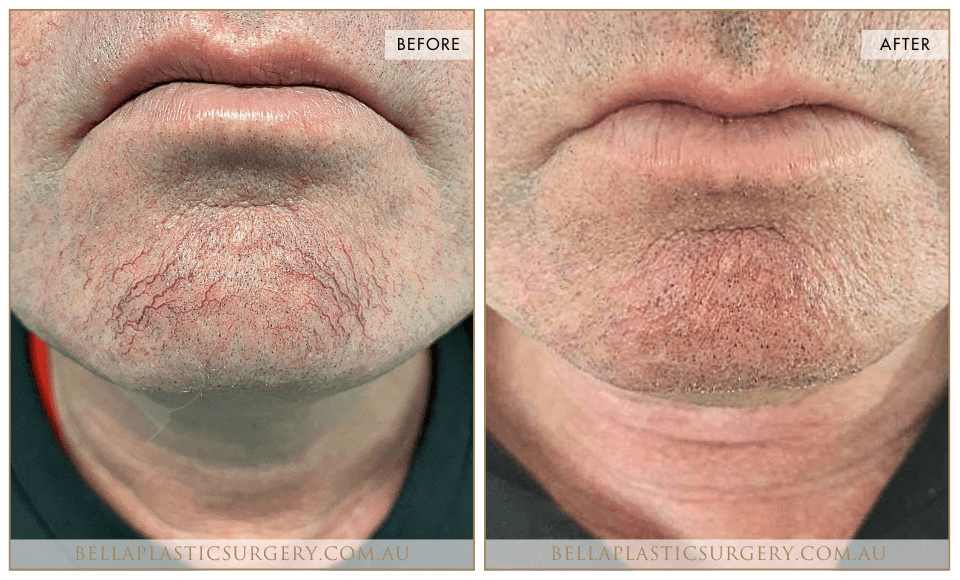
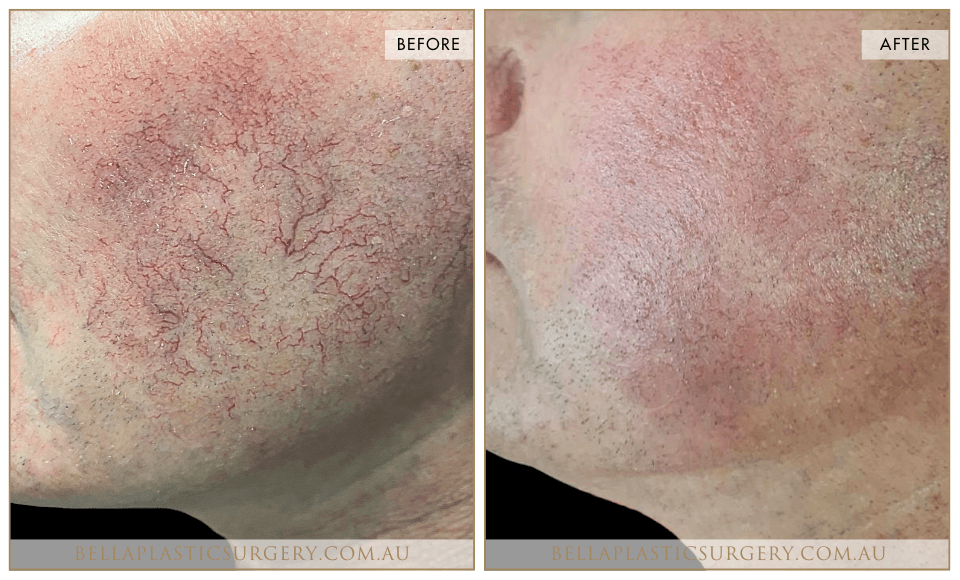
When targeting Broken Capillaries with Laser, the device delivers controlled energy directly into the visible vessel. This energy converts to heat within the vessel, causing its walls to coagulate and disrupting the blood supply.
The body slowly reabsorbs the treated vessel, minimising the appearance of the capillary. At Bella Plastic Surgery, our Laser device features a fine treatment tip that allows our treating cosmetic nurses to target individual capillaries.
Laser treatment for Broken Capillaries is designed to treat superficial, clearly visible and accessible capillaries. It may not target deeper blood vessels effectively.
Before treatment, all patients must have a face-to-face consultation to assess suitability, discuss potential risks and develop an individual treatment plan.
Understanding The Treatment
During treatment, the Laser delivers targeted energy that converts to heat as it penetrates the blood vessel. This causes the vessel walls to coagulate, interrupting the blood flow within the vessel. As heat is used during treatment, there may be temporary skin reactions, including tenderness, swelling, redness and the formation of small surface crusts as the skin heals. These reactions are a normal part of the healing process and settle in time.
At the end of your session, you’ll receive written after-care instructions to take home.
Treatment Outcomes & Limitations
Laser treatment can minimise the appearance of Broken Capillaries; however, results vary between individuals. Some cases require repeat treatments to achieve the desired cosmetic outcome. New vessels may also develop over time due to the body’s natural circulation and underlying blood supply.
To understand how broken blood vessels appear, it can be helpful to use the analogy of a tree. Our visible capillaries are like branches, while deeper vessels are like the trunk supplying blood flow. Although we may remove the outer branches, the underlying circulation remains, allowing new capillaries to form in the future. In essence, we can treat Broken Capillaries symptomatically, but not prevent them.
Comfort Measures
Some individuals find Laser treatment uncomfortable. To minimise discomfort, we apply a topical anaesthetic cream to the area 30 to 60 minutes before treatment, allowing it to numb.
Appointment Time Required
Your initial consultation usually takes approximately 30 minutes. This includes time for your clinician to assess the area, discuss treatment suitability and explain the procedure and after-care instructions.
The Laser procedure itself is typically brief, although we require additional time for preparation, including the application of a topical anaesthetic.
In some instances, we may combine the consultation with the treatment in the same appointment, depending on clinical suitability and appointment availability.
Recovery
- Immediate Effects: After treatment, it’s normal to experience swelling, mild redness and occasional yellow fluid weeping from the treated area for several days.
- Scabbing: Small scabs usually form over the treated areas. This is a normal part of the healing process and usually resolves within 7 to 14 days. Do not pick the scabs, as this can compromise healing and increase the risk of scarring.
- Moisture: Keep the treated area dry during the early healing phase. Excess moisture can soften the scabbing, causing it to detach prematurely. This can lead to repeated scabbing and less favourable scarring outcomes.
- Healing tissue: After the scabs have fallen away, the treated area may appear red due to increased blood flow while the skin repairs itself. This redness typically fades within weeks or months.
- Follow-Up Assessment: We may ask you to have a follow-up assessment to monitor healing. This can be arranged either in person or by submitting photographs a few days after treatment.
- Sun Exposure: Avoid sun exposure for at least six weeks after treatment, where possible. UV exposure during this time can increase the risk of pigmentation changes and delay recovery.
- Topical care: We may recommend medical-grade topical products to support the skin during healing.
LED Therapy
We may recommend Light Emitting Diode (LED) therapy several days after treatment for some individuals. This can support healing and help manage inflammation, depending on the treatment area and individual healing response.
Risks & Considerations
All nonsurgical cosmetic procedures carry risks. Potential side effects include:
- delayed healing
- redness and swelling
- blistering
- infection
- scabbing during healing
- temporary skin colour changes
- scarring (rare but possible)
Healing responses vary and outcomes cannot be predicted with certainty. We may recommend a patch test before treatment to assess how the skin may respond. Although this test often provides useful information, it does not guarantee a specific result.
