


Procedure gallery View patient results
What is a Tummy Tuck? (Abdominoplasty)
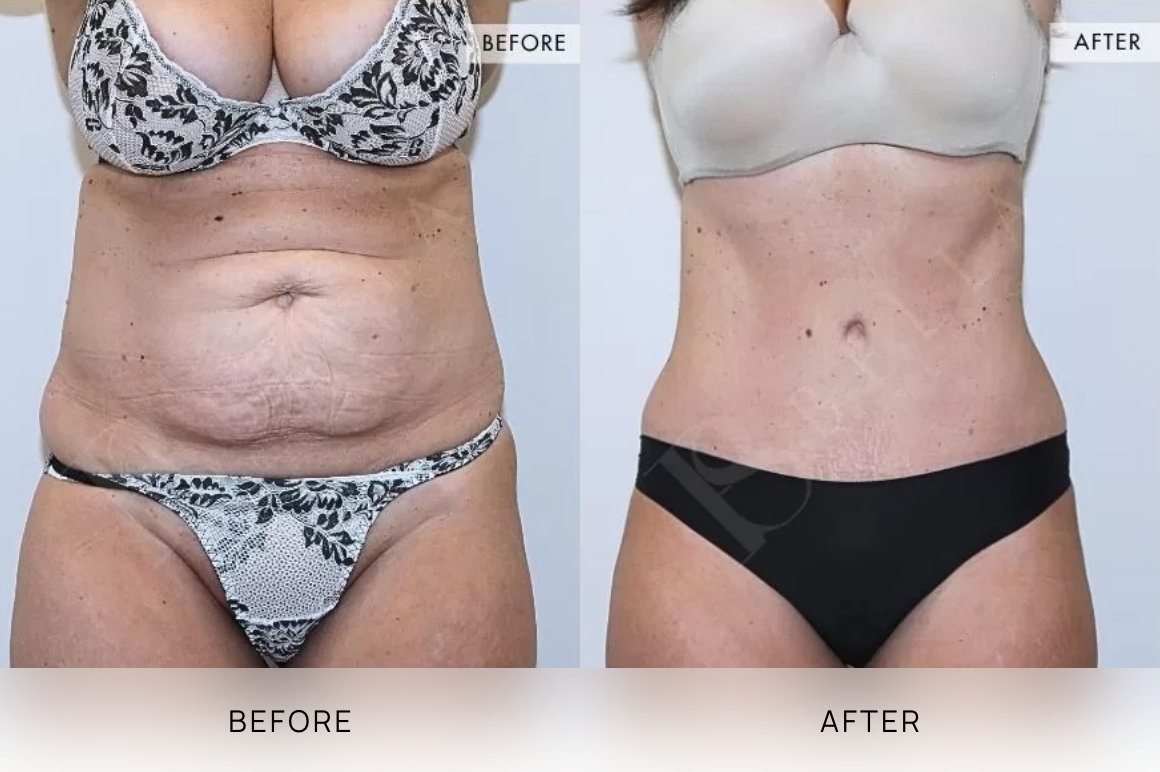
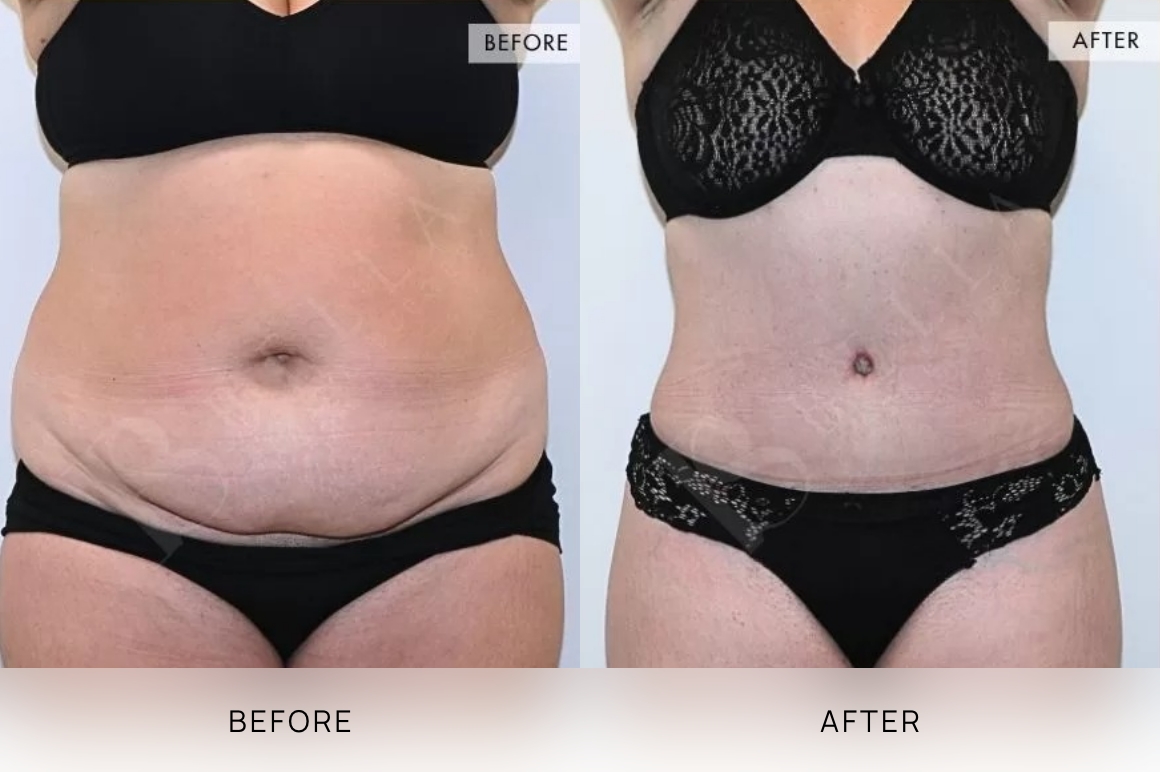
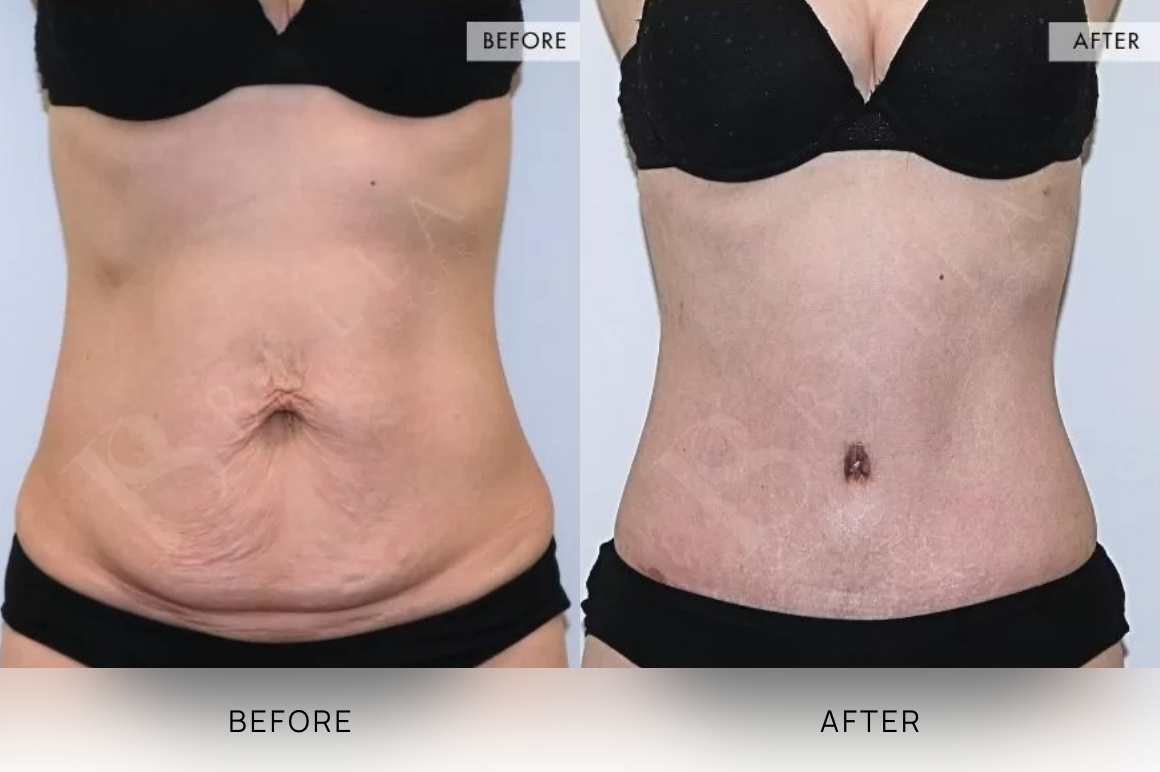
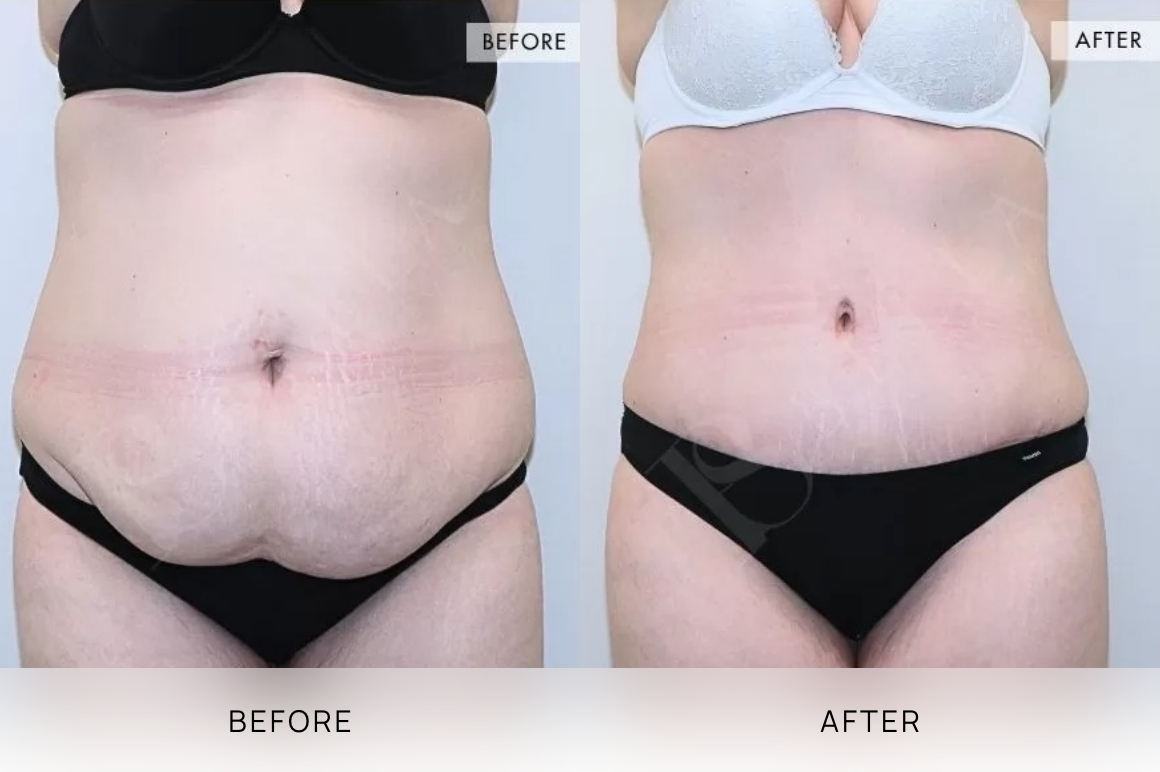
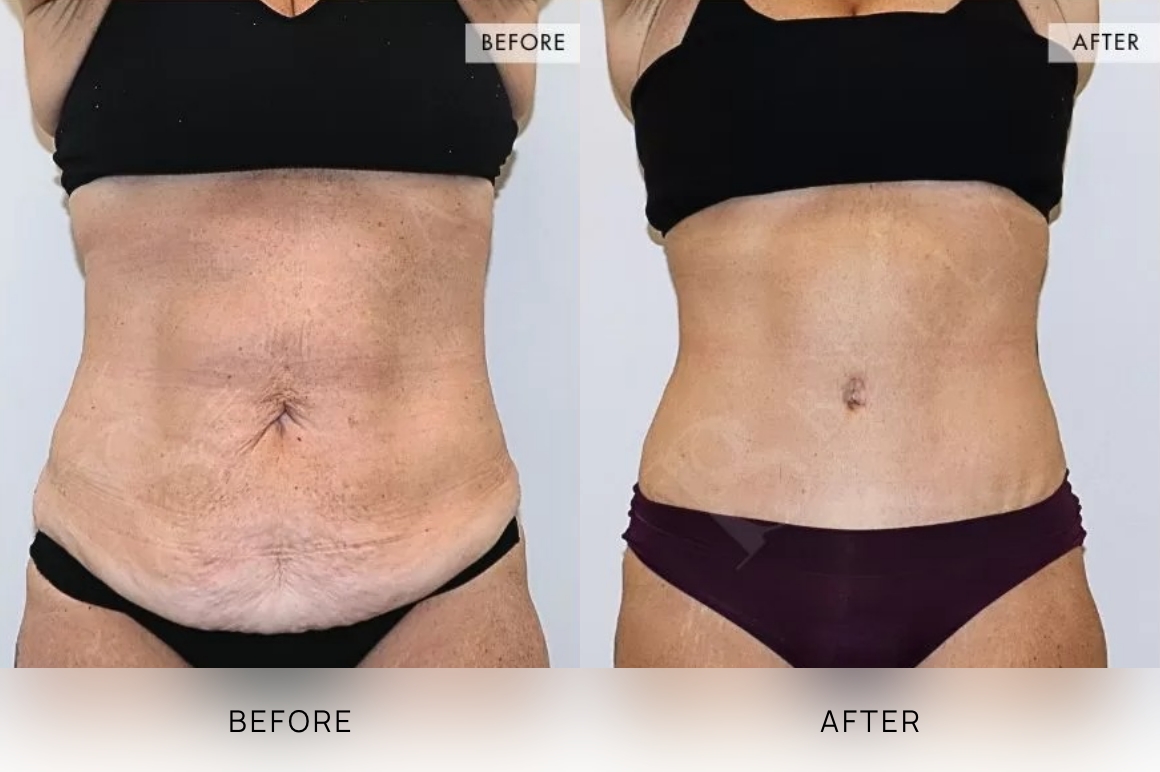
A Tummy Tuck (Abdominoplasty) is a surgical procedure addressing concerns related to the tummy area after pregnancy, trauma or severe weight loss. Individuals are typically concerned by excessive stretchmarks, loose skin and excess fatty tissue. Additionally, many suffer from weakened, separated muscles (a.k.a. rectus divarication or diastasis recti). They may also have hernias around their navel, which can affect posture and lower back pain.
Additionally, some people have legitimate concerns about excess fatty tissue and skin over the pubic bone, which can cause painful chafing, hygiene issues and difficulty wearing tight-fitting clothes.
A Tummy Tuck addresses the above concerns in several ways. Excessive skin can be removed (including most, if not all, of the lower abdominal wall stretchmarks), the fatty tissue associated with that excess skin is also removed and additional fatty tissue can be liposuctioned away. Any muscle separation issues can also be surgically repaired during Abdominoplasty. The outcome is a smoother, firmer, more contoured abdomen, with potential functional improvements in core stability.
Types of Tummy Tuck Procedures
Mini Tummy Tuck
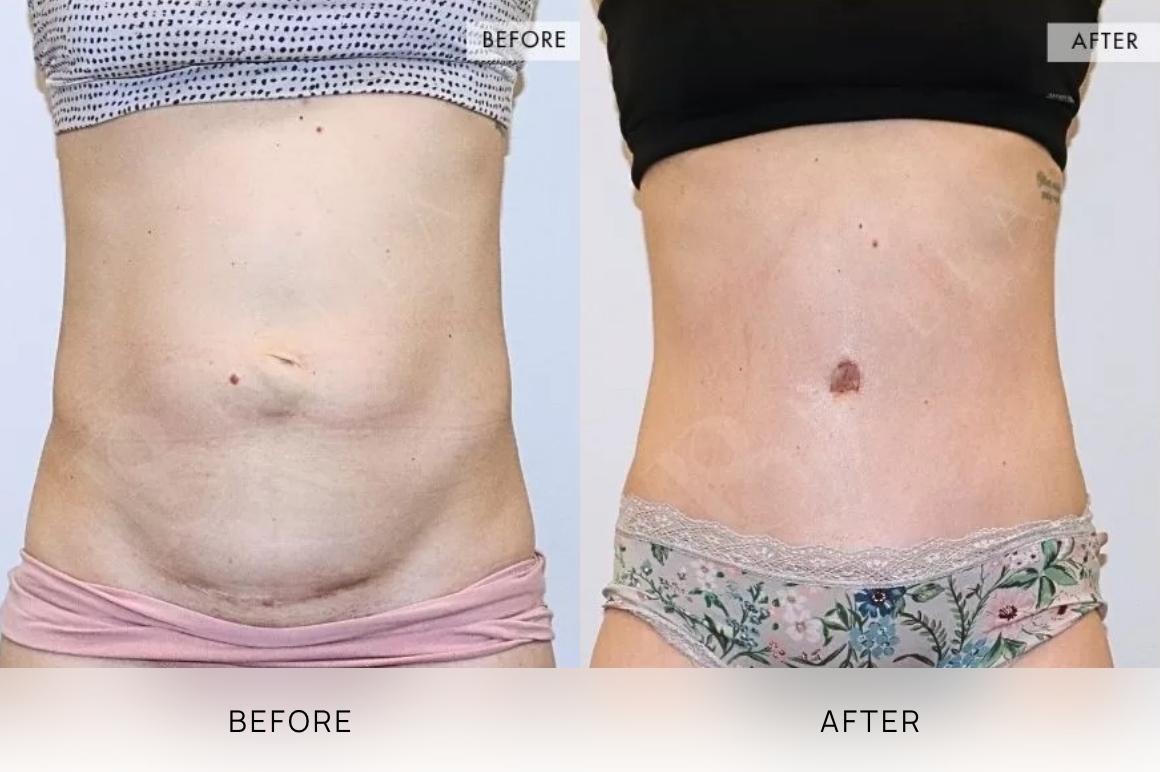
A Mini Tummy Tuck (Abdominoplasty) is generally suited for individuals with skin and tissue looseness below the navel area. They may also have some muscle separation.
With a Mini Tummy Tuck, the incision is much shorter than a standard Tummy Tuck – it’s not much greater than a caesarean scar. And there is generally no incision made around the belly button.
A Mini Tummy Tuck is best suited if you have:
- Low body fat levels and a healthy body composition
- Loose skin concerns are only above the pubic area
- You have minimal excess skin above the belly button
- You are happy with the condition of your belly button
- There may be some abdominal muscle separation
- Your abdominal skin tone is good, but there may be a deep and tethered caesarean scar, which causes substantial irregularity in the area.
Standard Tummy Tuck
A Standard Tummy Tuck is the traditional form of Abdominoplasty. It involves an incision from one hipbone to the other, just above your pubic bone. Therefore, your scar will be covered when wearing normal underwear or bathers. There will also be a small scar around your navel.
Essentially, this procedure removes excess skin and fatty tissue, tightens the abdominal muscles, lifts the pubic area and completely reconstructs the abdominal wall.
A small incision is made around the belly button to free it from the skin and fatty layer. Your fat and skin are lifted from the underlying abdominal muscles to the level of the rib cage. If your abdominal wall has separated, they will be stitched together from the top to bottom to tighten them. This will help restore the normal appearance of your rectus ‘six-pack‘ muscles while correcting any central hernias.
Restoring these muscles also helps strengthen your abdominals, which will help with your posture or any back pain or continence issues.
Next, the skin and fat layers are stretched down and the superfluous skin and fat are removed from the lower tummy. If you have excess skin above the pubic bone, this is also tightened at the same time.
Finally, a new opening is made for the navel and it is stitched into position.
Fleur-de-lis Tummy Tuck
A Fleur-De-Lis Tummy Tuck is reserved for those who have lost a lot of weight. Typically, they have a lot of excess skin hanging downwards and on the sides of the waist. In these instances, a different technique and scar pattern is needed to reconstruct the abdominal wall.
While most Tummy Tuck surgeries have just one scar from hip to hip, the Fleur-De-Lis Tummy Tuck has an additional scar along the entire midline of your abdomen up to your lower chest. This way, the surgeon can also address the looseness of your lower abdominal wall from side to side.
Although this surgical procedure leaves you with more scarring, the payoff is a maximised change in your body shape.
Open Book Tummy Tuck™
The Open Book Tummy Tuck™ (OBTT) was created by Dr Eddy Dona. This procedure is best suited for those who have experienced drastic weight loss, have an excessive amount of skin and require significant reconstruction.
In addition to the scars of the Fleur-De-Lis Tummy Tuck, the OBTT has a third scar lying horizontally along the entire lower chest in the lower breast fold. The midline scar joins the two horizontal scars – the lower chest and lower abdominal scars.
These additional scars help remove excess skin and tissue along the upper outer abdominal wall (not just the lower) by removing a broad segment of skin along the midline from top to bottom.
The phrase ‘Open Book’ describes how the abdominals appear halfway through the operation, with the skin and fatty layers opened like a book before being closed in its newer, tighter form.
Reverse Tummy Tuck
A Reverse Tummy Tuck (Abdominoplasty) has a scar pattern that differs from a traditional Tummy Tuck. Instead, the scar is in the upper abdominal wall and lower chest region and lifts the abdominal wall skin. The scar is only at the front of the body, much like the front half of a Bra Lipectomy (Upper Body Lift).
Belt Lipectomy
A Belt Lipectomy is a comprehensive surgical procedure, also known as a Lower Body Lift. Rather than only addressing the abdominal area, this procedure completely reconstructs the belly, flanks and buttocks in one operation.
A Belt Lipectomy removes rolls of excess skin and fat from the abdominal region, lower back and flanks. It also lifts the pubic region and buttocks.
The patient will have a circumferential scar right around the body, a bit like a ‘belt‘.
Tummy Tuck Recovery
The First 24 Hours Post-tummy Tuck Surgery
The First 2 Weeks Post-tummy Tuck Surgery
3 to 4 Weeks Post-tummy Tuck Surgery
6 Weeks Post-tummy Tuck Surgery
Potential Risks & Complications Associated With Tummy Tuck Surgery
Every surgical procedure carries risks. To read more about general potential surgical complications, please click HERE
In addition to the above, abdominoplasty risks and complications include:
- Naval deformity or malpositions
- Significant scarring
- Skin irregularities – such as bumps or uneven skin tone
- Asymmetry
- Poor circulation
- Temporary and permanent changes in skin sensation
- Fatty tissue damage – or necrosis
- Prolonged swelling or pain
- Seromas – where fluid builds up under the wound
- Further surgery requirements – fine-tuning the results
How Much is a Tummy Tuck in Sydney, Australia?
The price of your Tummy Tuck will heavily depend on your body and its requirements. Everybody is different and every surgical procedure is tailored to the patient and their needs. For example, a Tummy Tuck on a smaller patient may only take two hours, while a more involved Tummy Tuck on a larger body may take up to five hours. Therefore, the surgical (and anaesthesia) costs would be higher.
Other factors are also involved in the cost. For example, some patients may be eligible for a Medicare rebate. Additionally, those with Private Health Insurance may receive rebates from their fund. Some patients may only require two nights in hospital, while others may need an extra few nights, which will considerably increase the costs.
Does Medicare Cover the Cost of Tummy Tuck Surgery?
Medicare will cover Tummy Tuck surgery if your procedure is deemed medically necessary. For example, if you have a hernia, significant muscle separation after pregnancy, excess skin that is causing chafing or fungal infections or the weight of your excess skin is causing back pain and interference with everyday life, you may qualify for financial assistance from Medicare. However, to qualify, Medicare requires the correct documentation that strictly meets the criteria outlined in the Medicare Benefits Schedule (MBS).
The steps to determine your eligibility for a Medicare rebate for a Tummy Tuck are as follows:
- Schedule a visit with your GP to discuss your abdominal symptoms and related health concerns.
- Obtain a referral from your GP outlining your medical condition.
- Book an Initial Consultation with Dr Dona, our respected and highly experienced plastic surgeon.
- During your consultation, Dr Dona will assess your condition and determine if you meet any of the Medicare criteria.
- You may be eligible for a partial rebate if an applicable Medicare item number is identified. More importantly, meeting Medicare criteria is a prerequisite for accessing Private Health Insurance benefits.
- Private Health Insurance typically covers reconstructive procedures deemed medically necessary. To utilise your coverage, you may need to have the highest level of hospital cover and maintain it for at least 12 months.
- Your Private Health Insurance provider may cover your hospital fees, excluding any applicable excess payment as specified in your policy.
- After your consultation, you will receive a detailed quote outlining Dr Dona’s fees, anaesthetic fees and hospital costs. If relevant, the quote will also include any applicable Medicare item numbers and a clear explanation of how your Private Health Insurance may contribute to your surgery.
If I Meet the Criteria, What Costs Does Medicare Cover?
If your Abdominoplasty procedure meets the MBS criteria, they may provide rebates for the hospital costs, the surgeon’s fee and the anaesthetist’s fee. However, please note that Medicare will only cover a portion of the fees. Speak to your surgeon for specific information regarding costs.
