
Cherry Angiomas (a.k.a. Senile Angiomas or Campbell de Morgan Spots) are non-cancerous skin lesions formed by clusters of small blood vessels on the surface of the skin. The following characteristics can help identify them:
- Commonly appear on the back, shoulders, arms, chest and abdomen
- Small, purple, red or dark red spots on the skin
- Formed by clusters of tiny blood vessels
- Often develop with age
- Usually harmless, but may increase in number over time
Preparing for an Appointment
If you think you have Cherry Angiomas and are interested in treatment, the first step is to book a skin cancer assessment with a general practitioner (GP) trained in skin cancer medicine. (At Bella Plastic Surgery, we do not provide a diagnosis of moles or skin lesions as part of our service.) This assessment must be completed within two weeks of your scheduled Laser appointment.
During your GP appointment, your doctor must examine the Cherry Angioma lesions to confirm, to the best of their knowledge, that the lesion is benign. Once this has been confirmed, you may book your Laser appointment.
This pre-laser treatment examination is critical because, when Cherry Angiomas are removed with a Laser, the tissue is disintegrated. Therefore, it cannot be sent to pathology for testing.
After assessment, you must bring a copy of your GP referral letter to your Laser appointment.
NB: It is critical that patients understand that no examination can provide an absolute guarantee that a lesion is non-cancerous.
The Laser Treatment
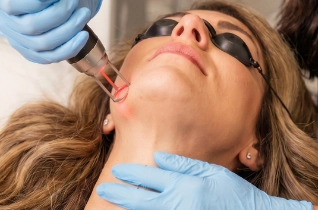
Laser technology works by ablating (burning) the Cherry Angioma lesion, creating a controlled injury in the skin while leaving the surrounding tissue intact. The Laser destroys the actual lesion while also cauterising the abnormal blood vessels.
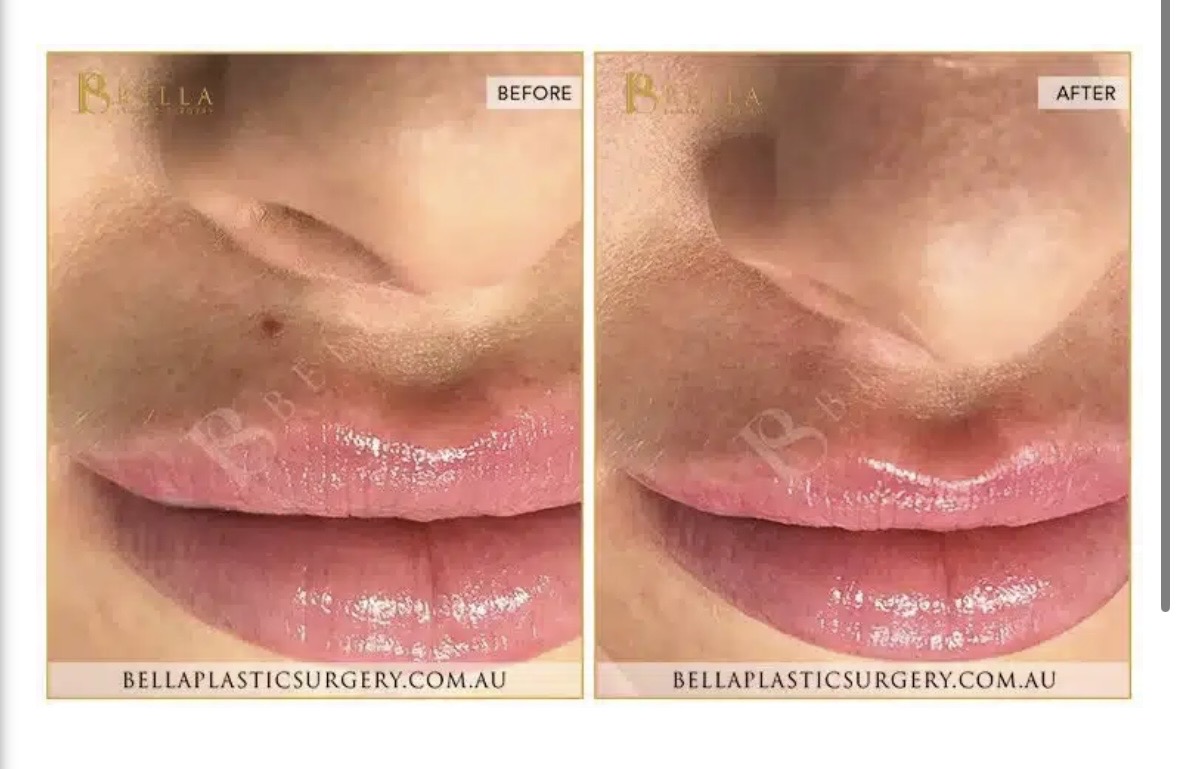
Immediately after treatment, the area may appear yellow or grey. This is a normal response caused by plasma attaching to the treated skin. A day or two after treatment, the area will form a small protective scab.
Recovery
Immediately after treatment, it’s normal to experience redness, skin tenderness, and mild swelling, which may persist for several days. The scab normally lasts one to two weeks before falling off.
Once the scab has gone, the treated area may appear red due to new capillary formation as the skin continues to heal. This redness typically fades over time.
While the skin is healing, it is vital to keep the skin dry to prevent the scab from softening and falling off too early.
Comfort during Treatment
Most individuals tolerate Laser Cherry Angioma Removal treatment well. Before treatment, we administer a topical anaesthetic to help numb the area; if additional numbing is required, we may also administer a local anaesthetic.
Costs
The cost of your Laser Cherry Angioma Removal will depend on the number of lesions treated, their size and location. During your consultation, your cosmetic nurse will assess the lesions and provide you with a quote before treatment proceeds.
Risks
Risks associated with treatment may include changes in skin colour, such as hypopigmentation (lightening of the skin) or hyperpigmentation (darkening of the skin). In rare cases, raised scar tissue, such as keloid or hypertrophic scarring, may form.
For more information, please see our Risks and Complications page.
