

Causes of Acne Scarring
Acne Scars are caused by the skin’s inflammatory response to severe acne. When acne lesions extend into deeper layers of the skin, the body produces collagen to repair the damaged tissue. This repair process does not always occur evenly, leading to visible changes in skin texture.
Contributing factors to Acne Scarring include:
- damage to the skin during healing
- irregular collagen production during repair
- inflammation from deeper acne lesions
- delayed or ineffective treatment of active acne
- picking or squeezing acne lesions
If acne is managed promptly, it may help reduce the likelihood of more noticeable scarring.
Types of Acne Scars
We typically classify Acne Scars as hypertrophic or atrophic. Determining the type of scarring present helps guide the most appropriate treatment approach. Scarring may also be assessed by severity, ranging from mild to more advanced, depending on the extent of skin involvement.
Ice Pick Scars
Ice pick scars are deep and narrow and have sharply defined edges. They are usually less than two millimetres wide and may extend deeper into the dermis or underlying tissues. It may be difficult to treat these scars with surface-based treatments alone due to their depth.
Boxcar Scars
Boxcar scars are oval or round depressions in the skin with well-defined edges. They can be shallow or extend deeper into the dermis, depending on the amount of tissue loss.
Atrophic Scars
Atrophic scars are the most common type of Acne Scars. They develop when there is insufficient tissue beneath the skin during the healing process. This occurs after inflammation, when the skin fails to produce enough collagen to repair the area fully, resulting in visible depressions or indentations. Atrophic Acne Scars are typically classified into three main subtypes based on their depth and shape.
Rolling Scars
Rolling scars are typically wider than other Acne Scars. They have a softer, undulating appearance across the skin’s surface. These scars are usually caused by fibrous bands that anchor the dermis to the underlying tissue, creating a wave-like or rolling texture to the skin.
Hypertrophic Scars
Hypertrophic scars develop when the skin produces excess collagen while healing. The outcome is a raised area of scar tissue that remains within the original boundaries of the acne lesion. Hypertrophic scars usually develop within weeks of injury and may gradually soften or flatten over time. These scars are related to keloid scarring, which can extend beyond the original injury site and persist longer.
Pigmented or Red Scars
Some Acne Scars are also red or have pigmentation changes. These changes may make scars more noticeable even after the skin has healed.
Treatments for Acne Scarring
Choosing the most appropriate treatment for Acne Scarring depends on the type of scars present, the depth of tissue alteration, skin condition and whether there is any associated pigmentation or redness.
As Acne Scarring often involves multiple scar types, a combination of treatments is often required, each addressing different aspects of the scarring process. These combined treatments may require a staged or combined approach. These various treatments include:
- Micro-needling with Skin Boosters – to support collagen remodelling and skin quality
- Subcision – to address tethered scars
- TCA Cross – to address deeper, narrow scars requiring focal treatment
Many individuals are first recommended Micro-Needling combined with Skin Boosters, particularly when there is atrophic scarring, visible texture change or reduced skin quality.
Individual Treatment Plans
At Bella Plastic Surgery, all patients start their journey with a face-to-face consultation with one of our treating cosmetic nurses.
This consultation will include an assessment of your skin and a review of your medical history, current skin care, medications, lifestyle factors and treatment goals. Your cosmetic nurse will then discuss a proposed treatment plan, all costs involved, expected treatment intervals, possible side effects and any important pre – and post-procedure considerations.
If a prescription product, such as Skin Boosters, is recommended as part of the treatment plan, individuals must also be assessed by one of our doctors to discuss appropriate treatment options and if appropriate, prescribe the agreed product.
Once the product is prescribed, your cosmetic nurse can then perform the procedure under the supervision of the prescribing doctor in accordance with Australian medical practice standards.
Micro-Needling With Skin Boosters
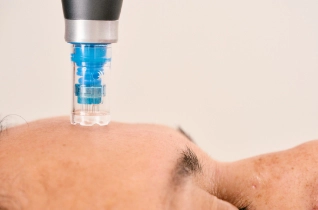
Micro-Needling (aka Skin Needling) is a clinically performed procedure that uses fine needles to create controlled micro-channels in the skin. This process stimulates the skin’s natural repair response and supports collagen activity, which can help address uneven skin texture, Acne Scarring and visible pores.
When Micro-Needling is combined with Skin Boosters, the treatment aims to support both mechanical skin stimulation and skin recovery. We most often use a Skin Booster that contains polynucleotides. These are molecules derived from salmon DNA and are used to support skin quality, elasticity and tissue repair.
This combination of treatments can be recommended for patients with Acne Scarring who need to address both structural skin changes and the overall condition of the surrounding skin. It may also be appropriate for individuals with a history of prolonged skin recovery.
Micro-Needling with Skin Boosters may be considered to:
- support skin quality and elasticities
- support skin regeneration and tissue recovery
- help with textural irregularities associated with Acne Scarring
- support collagen remodelling in atrophic Acne Scars
- help manage post-acne textural change
Micro-Needling with Skin Boosters is usually performed in the same appointment. The treatment depth, technique and product placement are determined based on skin thickness, scar type and the area being treated.
Deeper needle depths may be required when treating Acne Scarring, depending on its location and extent.
THE TREATMENT: Before commencing treatment, a numbing gel is applied to the area to support comfort during the procedure. Once the treatment area is numb, the Micro-Needling begins, creating controlled channels in the skin. Immediately afterwards, Skin Boosters are applied to the area.
Appointments for Micro-Needling with Skin Boosters usually take one hour, including consultation, skin preparation, anaesthetic application, the procedure and a review with your treating cosmetic nurse.
Subcision
Subcision is a minimally invasive technique often performed on tethered Acne Scars, particularly rolling scars. Fibrous bands beneath the skin attach the scar to deeper tissues, giving it a pulled-down appearance.
During subcision, a fine, sterile needle is placed beneath the scar to release the fibrous attachments mechanically. Once these bands have released and the area slowly heals, the scar may appear less tethered.
Subcision may be recommended for treating:
- scars with visible tethering
- rolling scars
- depressed scars that don’t respond sufficiently to surface-based procedures
At Bella Plastic Surgery, we sometimes combine subcision with Skin Boosters to support tissue quality during treatment. These boosters may be either complex sugar-based or polynucleotide-based, depending on your treatment plan.
Subcision is also often incorporated into a broader treatment plan alongside procedures such as Micro-Needling.
TCA Cross
TCA Cross stands for trichloroacetic acid chemical reconstruction of skin scars. It is a procedure commonly used for narrow, deep atrophic scars, particularly ice-pick scars and some boxcar scars.
During the procedure, a small amount of concentrated trichloroacetic acid is applied directly to the scar using a fine applicator. This creates a controlled chemical stimulation within the scar, supporting remodelling during the healing phase.
A small crust typically forms over the treated area, which then separates naturally over several days. When a series of sessions is performed, there may be a reduction in the visible depth and definition of selected scars.
TCA Cross is typically repeated at intervals, every four to eight weeks, depending on healing and clinical assessment by the treating cosmetic nurse.
Number of Treatments
Treatments for Acne Scarring are usually recommended as a series, as collagen remodelling develops gradually. We often recommend three treatments at monthly intervals. However, the number of treatments required will depend on skin response, scar severity and individual treatment goals.
Visible changes may occur sooner for some patients, while others may require a broader treatment program involving additional procedures. We may also discuss maintenance treatments as part of a longer-term plan.
Post-Procedure Care
After Acne Scar treatment, the skin is often temporarily red, swollen, sensitive, bruised, or may have small puncture marks, depending on the treatment performed. The duration and intensity of these effects will vary according to the procedure, treatment depth and individual skin response.
General post-procedure advice may include the following:
- Avoid active skincare unless specifically advised by your treating nurse
- Avoid make-up for the recommended. After treatment
- Avoid direct sun exposure or using broad-spectrum UV protection
- Keep the treated skin clean and well supported with recommended products
- Avoid alcohol, strenuous exercise, excessive heat and unnecessary handling of the treated area immediately after treatment
- Avoid other skin procedures until the skin has settled
Your specific after-care instructions will be based on the procedure performed and your individual treatment plan and will be provided by your treating nurse.
Costs
The cost of Acne Scar treatments varies, depending on the type and severity of scarring and the treatments recommended. All patients will receive a clear cost breakdown at the end of their initial consultation once their personalised treatment plan has been developed.
