

How Does A Non-surgical Brow Lift Work?
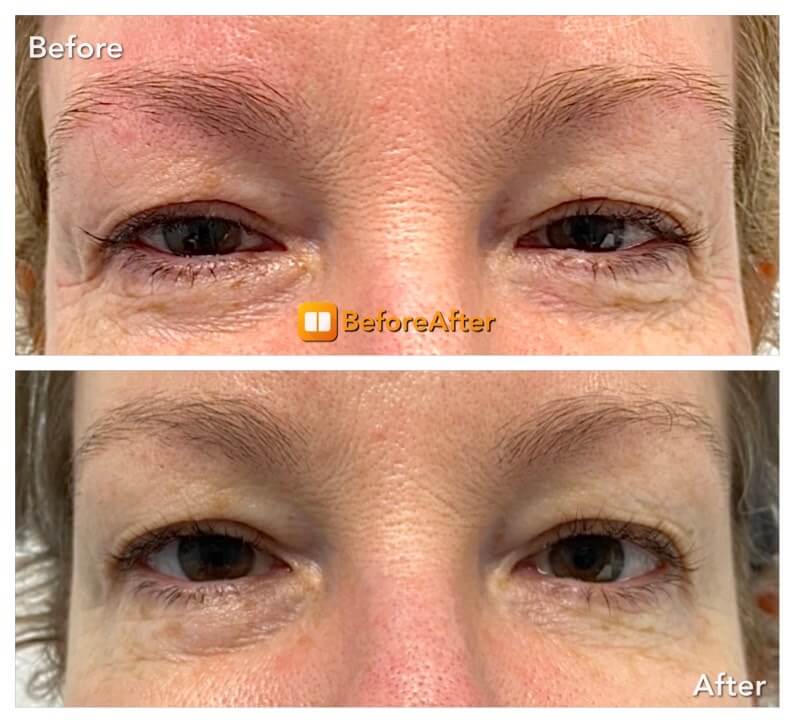
A non-surgical Brow Lift uses muscle relaxants to relax specific muscles around the forehead and eyes that contribute to downward brow movement. By relaxing these muscles, the brow can sit slightly higher and the eyes can appear more open.
A Brow Lift is suitable for individuals who have heavy upper eyelids or mild brow drooping (ptosis). It is not a replacement for surgery; instead, it’s suitable for those who would like subtle changes with minimal downtime.
Targeting Specific Muscles
The procedure involves targeting several specific muscles, carefully balancing those that elevate the brow with those that pull it down.
- The Eye Muscle (Orbicularis Oculi): This is the circular muscle that surrounds the eye. When it contracts, it moves inward and slightly downward. By relaxing specific areas of this muscle, the eye can appear more open and the brow can slightly lift.
- The Forehead Muscle (Frontalis): This muscle lifts the eyebrows. If treated too severely with a muscle relaxant, it can partially prevent the muscle from lifting, resulting in a heavier brow appearance.
Creating an Optimal Brow Lift Result
To support lift, especially at the outer brow, the cosmetic nurse may choose not to treat part of the forehead above it. This way, the muscle can continue to lift while the downward-pulling muscles are relaxed and softened.
Treatment Longevity
Most Brow Lift treatments last around two to three months. If regular treatments are received over time, results may last longer as muscle activity gradually reduces.
If an individual chooses to stop treatment, the muscles will slowly return to their original movement patterns and the area will appear as it was before.
Brow Lift for Heavy Eyelids
Patients with heavy upper eyelids can be treated by focusing around the eye muscle to help minimise inward or downward pull. This approach may allow the eyes to appear more open while slightly lifting the upper eyelid, helping the overall eye area appear more open.
Post-Procedure Care & Activity
After your procedure, you may experience tightness, redness or bruising, which usually resolves over time. You’ll notice the first changes in this area after a few days, with full effect developing over approximately two weeks.
You may resume normal activities immediately after your treatment, but avoid strenuous exercise, heat, alcohol and massage (in the treated area) for the first 24 hours.
Avoid facial treatments for two weeks. If you have any concerning symptoms, please contact our clinic immediately or seek medical care if required.
Potential Risks
All non-surgical treatments carry risks. While most patients do not experience complications, possible side effects include bruising, swelling, redness, tightness, tenderness, temporary muscle weakness or headaches. Less common side effects include eyelid or brow drooping (ptosis). Rare side effects may extend beyond the treatment area, causing vision changes or muscle weakness. These risks will be discussed with you during your consultation.
