

Understanding Laser Removal
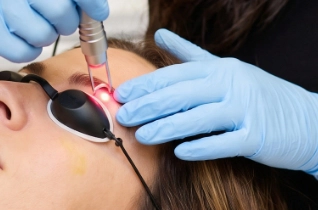
Laser treatment is typically performed in a clinic setting and generally does not require hospitalisation. Usually, the procedure only takes a few minutes. To determine suitability for treatment, patients must first have a consultation with one of our cosmetic nurses.
Laser can carefully target the affected tissue while minimising disruption to the surrounding skin. At Bella Plastic Surgery, our Laser device features a fine treatment tip that precisely targets the visible lesion in a small treatment area. The treated area is usually left to heal naturally without the need for sutures.
Appointment Time: Laser treatment typically only takes a few minutes. However, the time taken depends on the size and number of lesions being treated. Appointments are usually scheduled for approximately 30 to 60 minutes to allow time for consultation, consent, treatment preparation and discussion of after-care instructions with your cosmetic nurse.
Number of Treatments: In some instances, only one appointment is required as the lesion can be treated in a single session. However, if fatty deposits extend deeper into the skin, additional treatments may be required.
Patients must understand that no treatment method guarantees complete removal and in some instances, laser treatment may not fully clear the lesion.
Comfort during Treatment
Most people describe the Laser Xanthelasma treatment as mildly uncomfortable but generally tolerable, due to its short duration. If additional comfort is preferred, we may apply a topical anaesthetic cream or administer a local anaesthetic to numb the treatment area before proceeding.
Healing & Expected Post-Treatment Changes
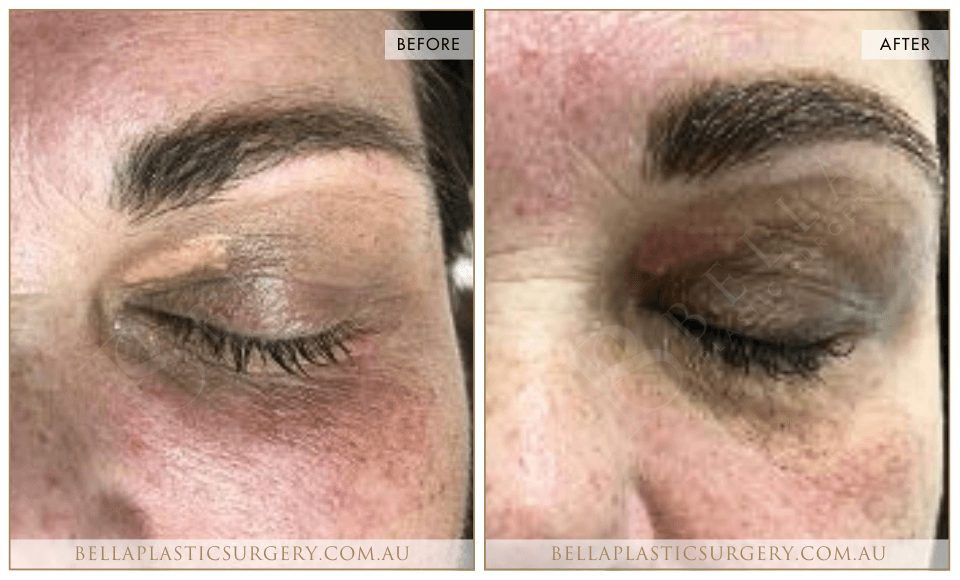
Immediately after treatment, the area may appear slightly swollen and red. These effects are usually temporary and settle within a few days.
Small scabs typically appear over the treated areas as part of the normal healing response. These usually settle over approximately 14 days. Once the scab falls away, the skin can appear red or pink while new tissue continues to form. This redness typically settles as healing progresses.
Facial skin usually heals well. However, the treated area can heal with a lighter skin colour than the surrounding tissue.
After-Care
At the end of a treatment session, you will receive verbal and written after-care instructions.
During the healing phase, you must let the treated area heal naturally. This means leaving the scab intact and allowing it to fall off on its own. Avoid picking or scratching the treated area, as this can interfere with healing and increase the risk of scarring.
We may ask you to return to the clinic approximately three to four days after treatment for Light-Emitting Diode (LED) therapy and a review with your cosmetic nurse. If you cannot return to the clinic, we usually ask patients to send us follow-up photographs around three days post-treatment so we can assess your healing response.
If you have any concerns during your healing, we encourage you to contact the clinic to discuss them or arrange a review.
Essential Considerations
Before proceeding with treatment, patients must be aware of the following information.
- There is no guaranteed or simple treatment for Xanthelasma. Laser treatment may improve the appearance of the lesion; however, it may not always achieve complete removal.
- Xanthelasma can recur over time, even after successful treatment. This includes individuals actively managing cholesterol levels.
- If Xanthelasma returns, additional treatments or alternative approaches (including surgical options) may be required.
Given the above, it is essential to consider all available treatment options carefully. In some instances, surgical removal may be recommended as the first treatment, particularly for deeper or larger lesions. For individuals who choose laser treatment, surgery may also be discussed as a secondary option in case the lesion cannot be fully removed or if it recurs.
During your consultation, your cosmetic nurse will discuss possible treatment options, limitations and the anticipated treatment pathway so that you can make an informed decision.
Cost of Treatment
The cost of Laser Xanthelasma treatment depends on the number, size and location of the lesions, as well as the recommended treatment approach. It also depends on treatment outcomes and whether further treatments are required.
To determine pricing, patients must have an in-clinic consultation with one of our cosmetic nurses to assess the area, discuss possible treatment options and processes and provide all costs.
Cosmetic procedures are typically not covered by private health insurance and all treatment costs are the patient’s responsibility.
Risks & Complications
As with all skin procedures, Laser Xanthelasma treatment carries risks and potential complications. Although complications are uncommon, they can include delayed healing, infection, blistering or crusting, changes in skin pigmentation, recurrence of the lesion and scarring.
Most treated areas heal well. However, there is always a risk of scar formation, including keloid or hypertrophic scarring, in individuals prone to this healing response.
To learn more about these issues, please visit our Potential Risks and Complications page.
