

What Are Keratosis Lesions?
The two common types of keratoses are actinic and seborrhoeic. In actinic keratosis, a small reddish, scaly, dry patch of skin forms over time and is often associated with sun damage. Actinic keratosis can become skin cancer if left untreated.
Seborrhoeic keratosis (SK) is one of the most common benign (non-cancerous) skin growths. It is not to be confused with another common skin condition referred to as Actinic Keratosis (AK) which is also referred to as Solar Keratosis. AK are a precancerous skin lesion.
SK have a waxy, scaly, slightly raised appearance; it often ranges from light brown to black.
What Can I Expect in the Treatment?
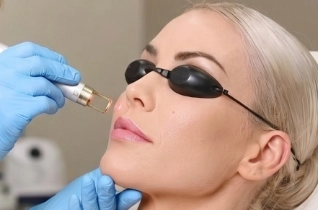
First, we will clean the area to be treated and if required, topical anaesthetic may be applied. Then your keratosis lesion(s) will be removed using our laser technology. The laser instrument has a small pen-tip head that targets the keratosis lesion but leaves the surrounding skin untouched.
Benefits of Laser Treatment
Keratoses can be removed within minutes from the face and body. For facial keratoses, laser treatments may avoid the scarring from the liquid nitrogen or acid-based chemicals commonly used in many medical clinics.
While some minor scarring can occur from a laser treatment, this is usually pale white and no larger than the treated area. Facial skin heals very well. In most cases, you will be unable to detect the original location of the keratosis once the treated area has healed.
Post-Procedure Results
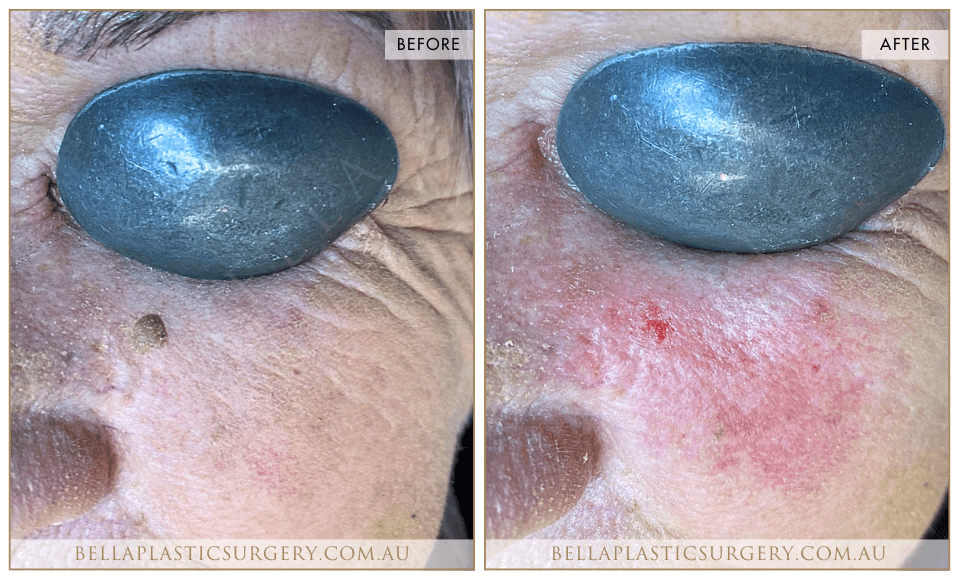
Following your Laser Keratosis Treatment, there will be some redness, slight swelling and yellow oozing around the treated area(s) for up to a week following your treatment. In addition, a temporary scab will form; this is a natural part of the healing process.
The scab will usually fall off within seven to ten days and it is essential to avoid touching or scratching the scab off the treated area. Scratching or picking at the scab can cause inflammation, making any scarring more prominent.
After the scab has fallen off, the treated area will appear red due to new capillary formation. Any redness around the treatment area will usually dissipate in a matter of months following treatment.
Potential Risks
Even though you have had your keratosis(s) or other skin lesions assessed as being benign (cancer free) by your skin cancer practitioner, there is still a risk of skin cancer being present within your keratosis(s) or lesion(s), at the time of your laser treatment.
The laser ablates (burns) away the keratosis lesion, meaning that nothing is available to be sent away for pathology for further testing, so you need to be aware that pathology testing is not possible with this treatment.
Although the potential risks are extremely uncommon, one or more of the following may occur:
- Lightening or darkening of the skin in the treated areas
- Skin crusting or blistering
- Infection
- Scarring – which includes Hypertrophic or Keloid Scarring
Post-Procedure Care
Following your laser treatment, you may notice redness, bleeding, bruising, swelling and weeping at the site of treatment, which can last for several days to weeks.
It is normal for the treated area to feel a little sore and tender, for a few days post treatment. You will keep the treated area dry and intact following your treatment. We will provide you with a topical cream to be used 3-4 times a day to the treated area, until the area has healed.
- Please refrain from getting the treated area wet until scab has fully fallen-off the treated area.
- Avoid exposing the treated area to the sun for a minimum of 4 weeks following treatment.
- Do not pick as scabbing can lead to scarring.
- Makeup can be used over the treatment area so long as there is no extended redness, blistering or scabbing (mineral make-up is the best option).
- Avoid skin irritants such as hydroquinone, bleaching creams, tretinoin, retinol creams, benzoyl peroxide, chemical peels, glycolic acid and salicylic acid for at least 2 weeks after the procedure.
- Avoid any rubbing or friction movements on the treated area for three days post treatment.
You will be requested to send an image of the treated area(s) 3-4 days post treatment via email.
Our clinic can be contacted contact on 1300 373 662 if you experience any inflammatory reaction and/or side effect. If necessary, additional treatments, medications and/or surgery may be necessary. If out of hours, please attend your local medical centre or emergency department.
We will arrange a follow-up appointment for six weeks post-treatment at our clinic. If at any time you have questions or concerns, you should contact our clinic to arrange a face-to-face appointment.
If required, you will be provided with topical cream, designed to be used post skin injury, that will provide nutrients to accelerate the skin healing process. In addition, we also offer Ligh Emitting Diode Treatment (LED) to accelerate the healing process.
As part of your post-treatment care plan, you will be provided with verbal and written post-treatment instructions.
