

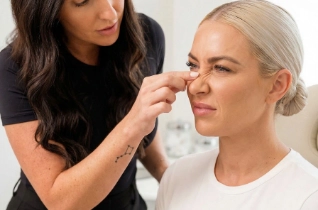
Bunny Lines are caused by a muscle that lies on the side of the nose called the nasalis muscle. When it contracts, the skin tightens and creases along the sides of the nose. By treating this muscle, we can soften the appearance of these lines during expression.
Understanding The Treatment
Treatment involves carefully targeting the nasalis muscle with a small dose of a muscle relaxant. It aims to minimise strong creasing while maintaining a balanced facial expression. The treatment is approached cautiously, using only a conservative amount of product, then building up slowly if required.
The treatment is quick; however, the number of areas treated will depend on your anatomy and facial expression. Assessing the entire face and its movement patterns is essential, as when some muscles are relaxed (e.g., those around the eyes), other muscles may compensate and become more active. This can make Bunny Lines look more noticeable in some individuals.
Other factors that can vary the treatment dosage include:
- age and facial anatomy
- gender
- depth and location of lines
- desired outcome
- muscle strength and movement
The first signs of results from your treatment will appear within a few days, with full results developing over approximately two weeks.
Comfort during Treatment
Bunny Lines treatment is quick and typically well-tolerated. We can apply a topical numbing agent before treatment, if desired. Ice can also help with comfort while minimising the risk of bruising.
After Your Treatment
You can resume your normal activities straight after treatment. However, we advise you to avoid strenuous exercise, alcohol, or anything that applies heat or pressure to the treated area. Avoid all facial treatments for two weeks. If you have any concerns or notice something unusual, please call the clinic immediately.
Treatment Longevity
Bunny Lines treatment usually lasts around six to eight weeks, as only a small amount of product is used compared to other areas of the face.
Potential Risks
All non-surgical cosmetic treatments carry risks. The most common risks include temporary bruising, tenderness in the treated area, redness, swelling and occasionally, mild headaches. Sometimes, results may appear uneven, or the surrounding muscles may respond differently than expected. These risks and complications will be explained to you during your consultation before you decide to proceed.
For more information, please see our Potential Risks and Complications page
