

Procedure gallery View patient results
What is an Upper Body Lift (Bra Lipectomy)?
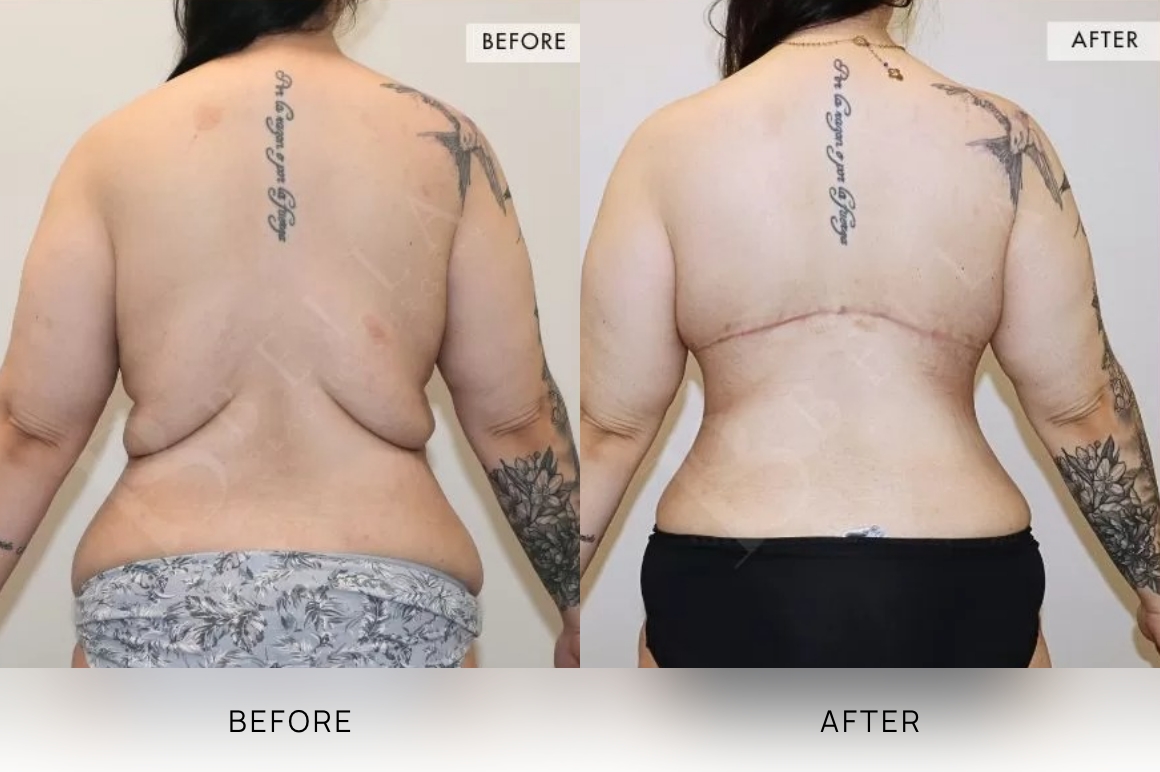
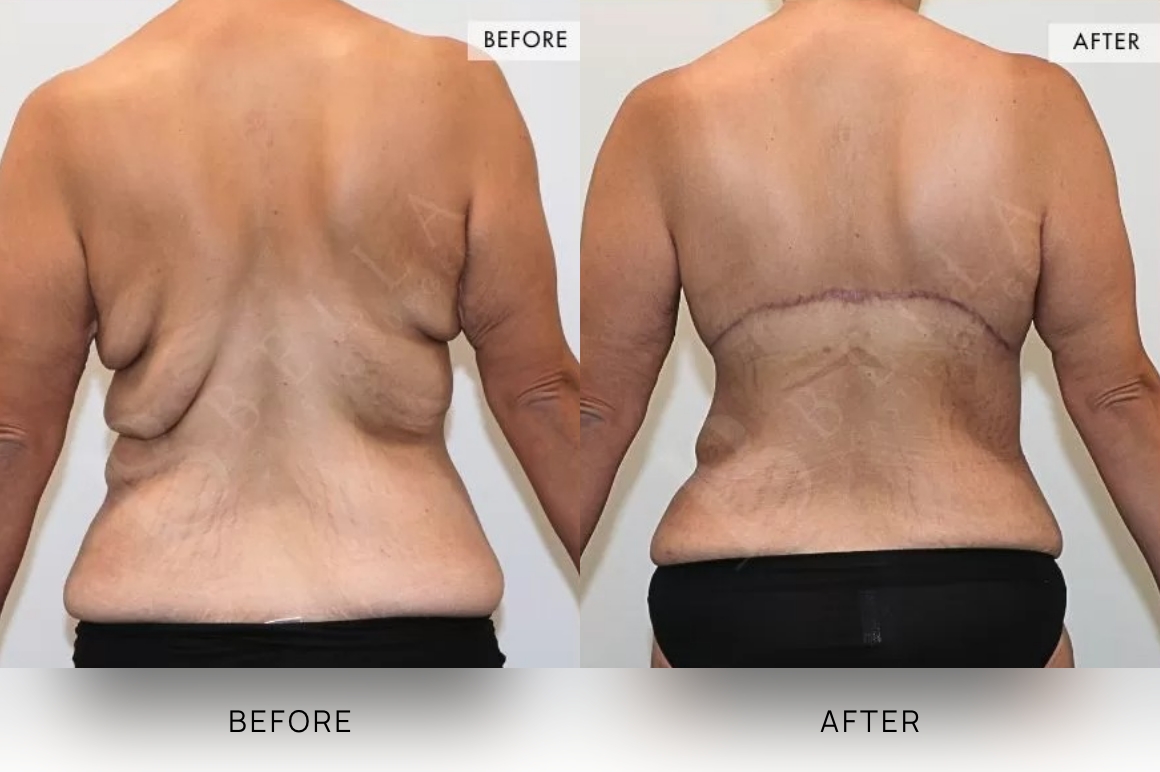
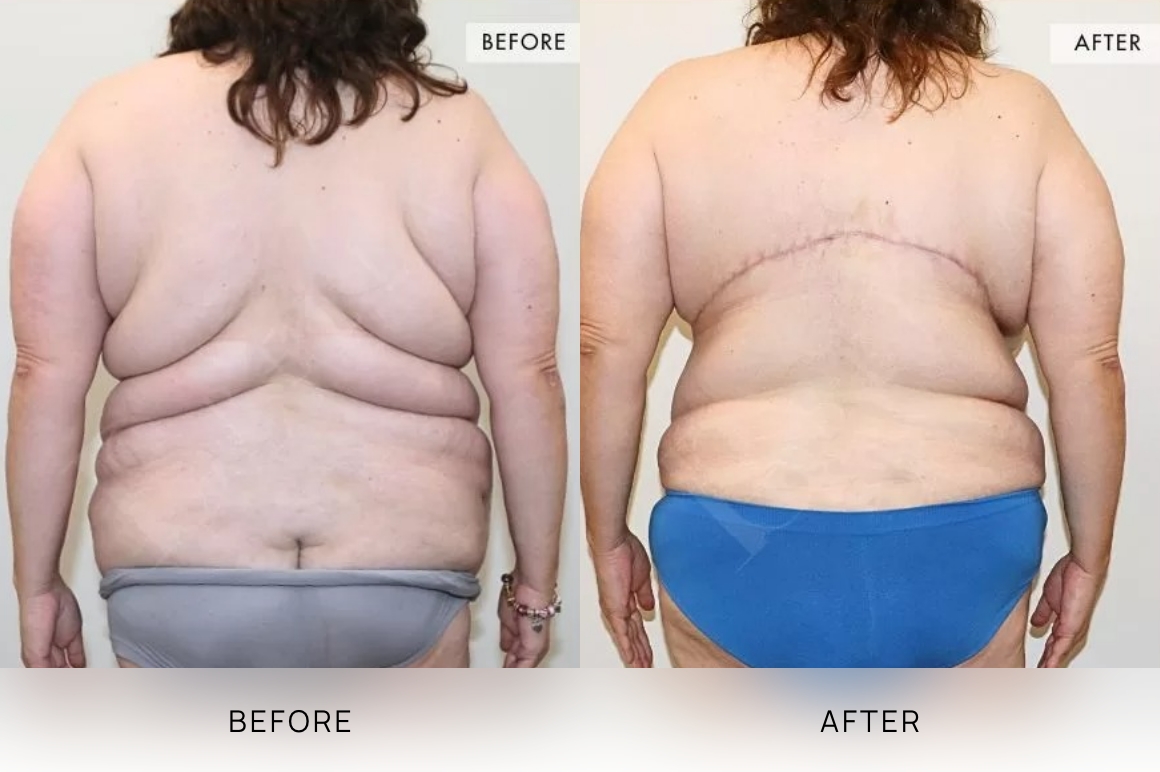
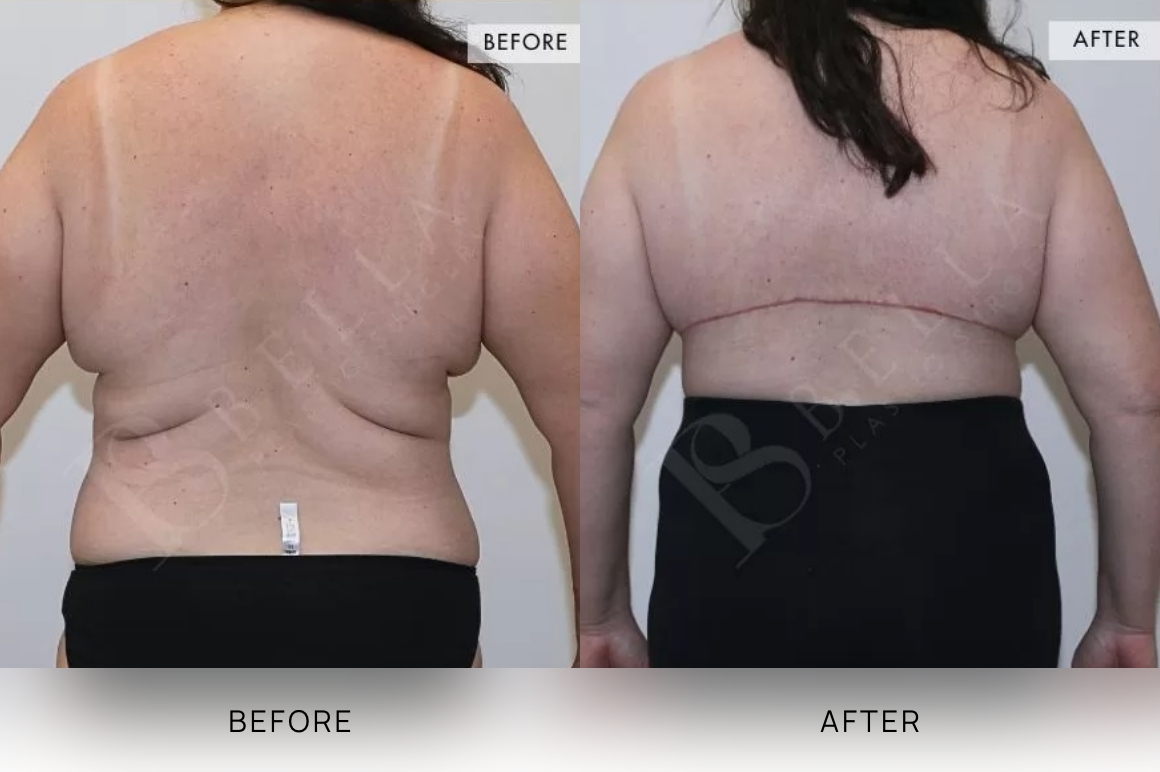
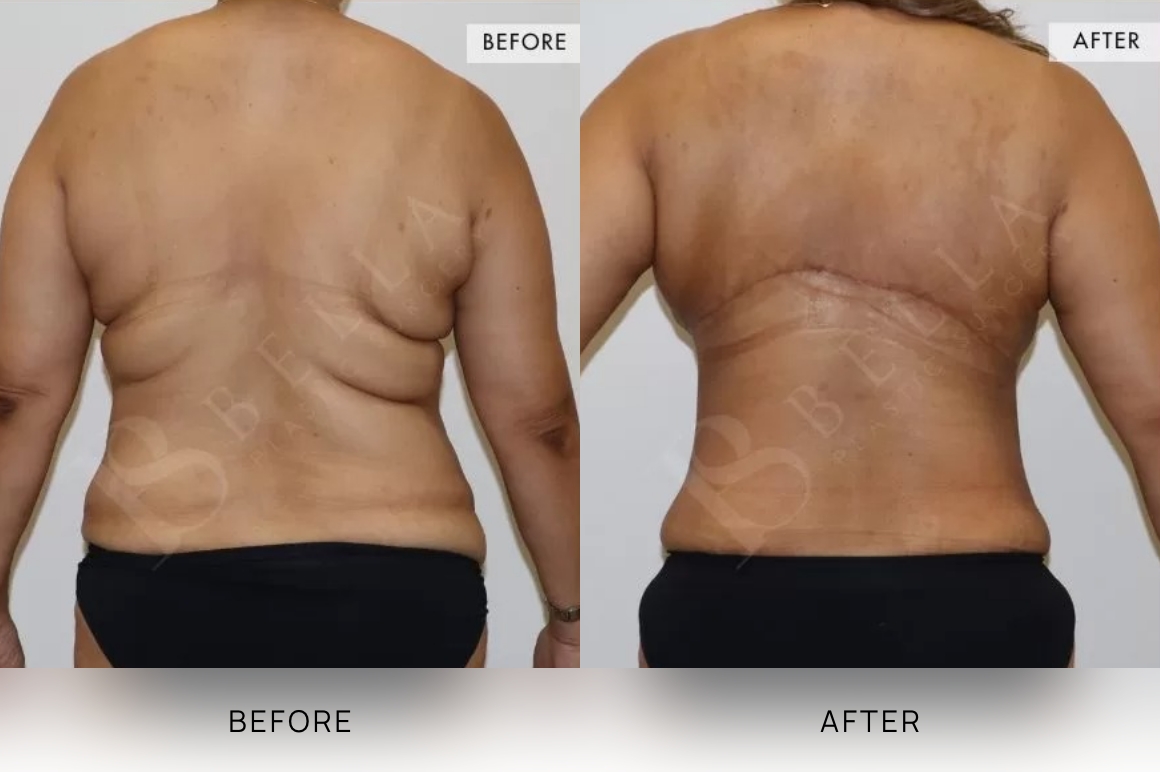
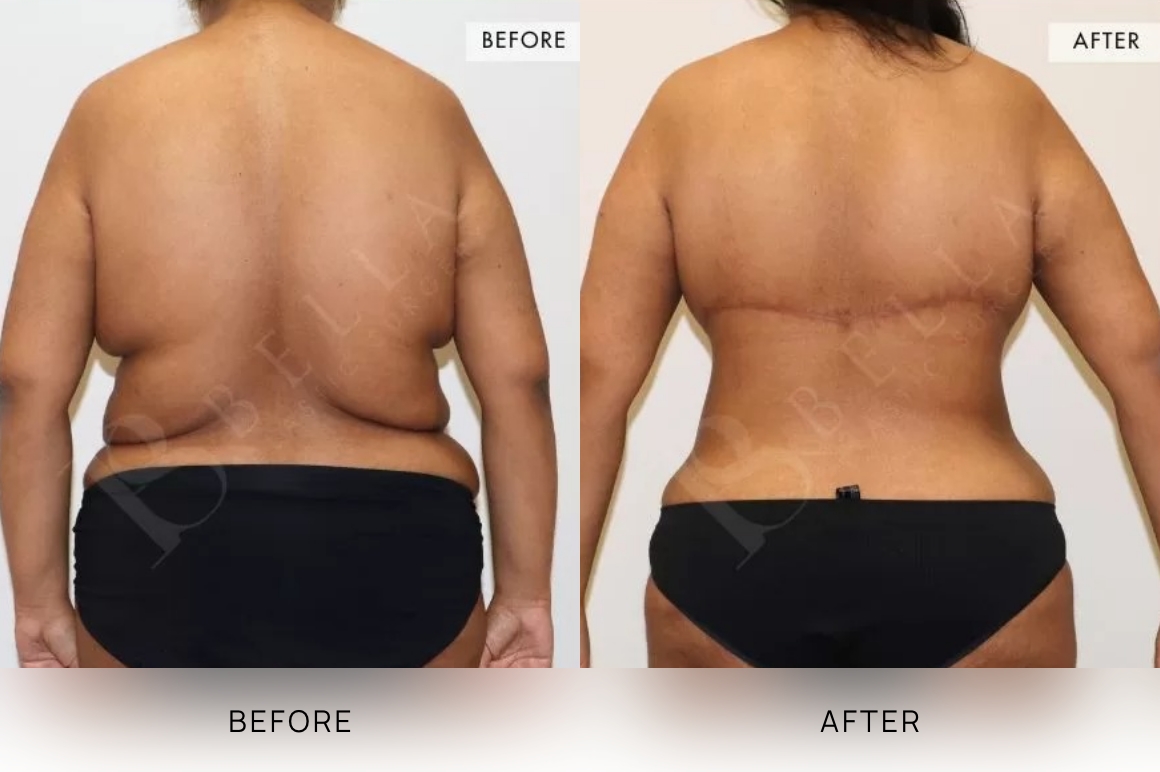
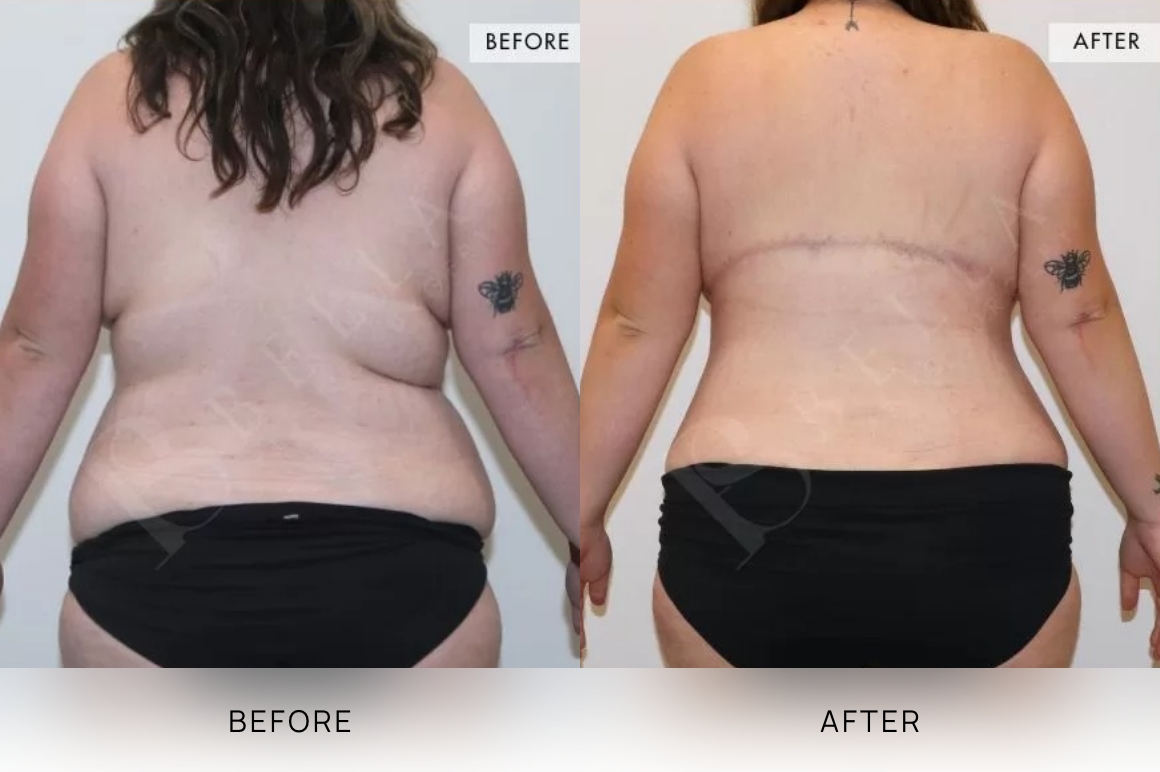
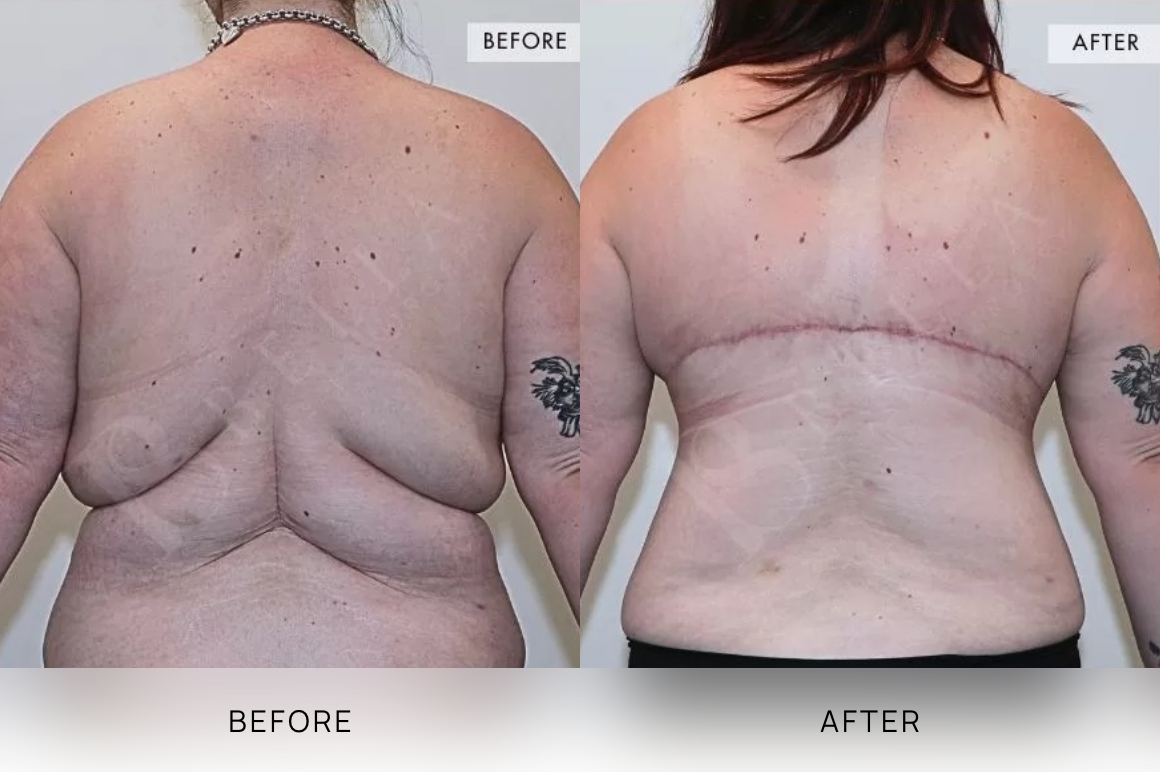
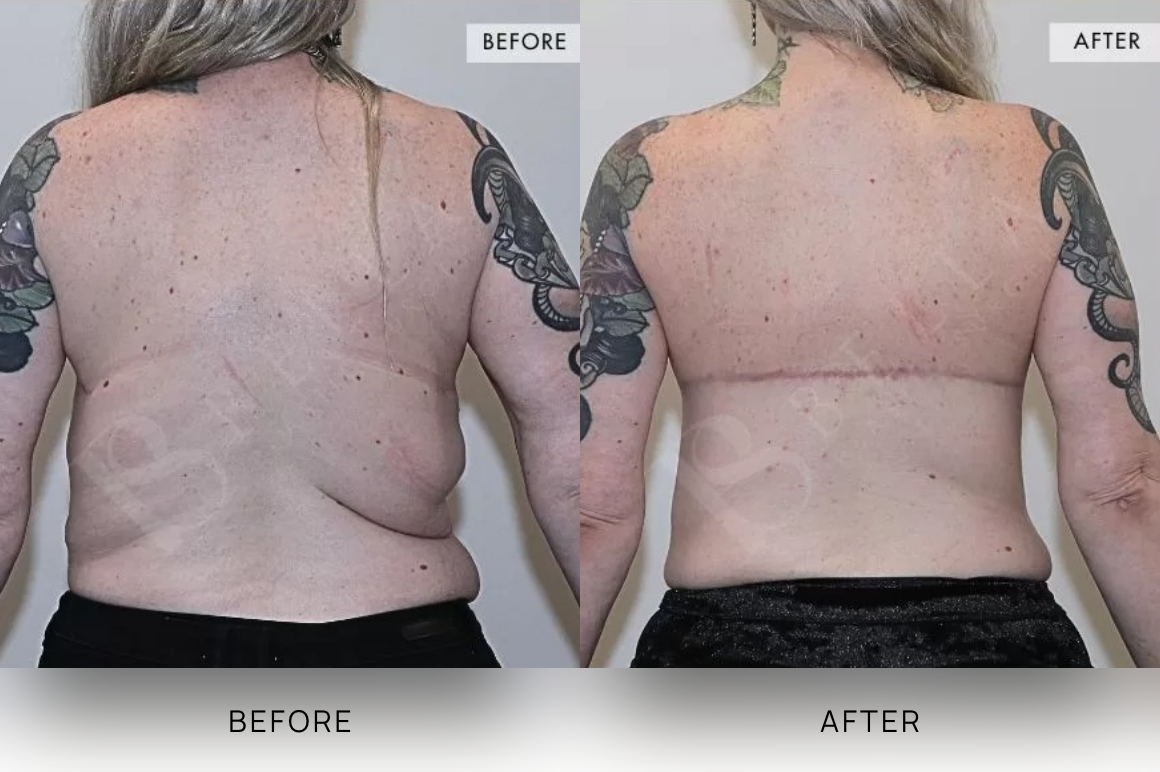
A Bra Lipectomy, also known as an Upper Body Lift, is a surgical procedure that addresses excess skin rolls and fatty tissue. Specifically, this tissue is in the upper and middle back, around the bra strap area. If an individual has lost significant weight, the excess skin in these areas can range from mild to severe. Often, the primary concerns with this excess skin are both functional (causing various health and hygiene concerns) and aesthetic.
A Bra Lipectomy essentially tailors this area during surgery by removing excess skin, creating a far more functional and aesthetically pleasing form.
The scar pattern for the surgery depends on the particular procedure. However, it typically extends from the back, through to the front of the chest wall, under the bust area (hence the term ‘Bra Lipectomy’). The scar pattern is circumferential, or near circumferential.
An Upper Body Lift is performed in a private hospital under general anaesthesia. Depending on the procedure required, your surgery may take between three and four hours.
Bra Lipectomies, Reverse Tummy Tucks & Other Names
As mentioned, a Bra Lipectomy is also sometimes called an Upper Body Lift. However, several names are associated with procedures that are similar yet slightly different. Some of these procedures include:
Bra Line Back Lift
This name reflects the surgery and the scar pattern, which is isolated to the back region. No scar extends to the front of the chest.
Upper Back Lift
A very similar procedure to the Bra Line Back Lift procedure
Upper Body Lift
Another term to describe a Bra Lipectomy, which has the same circumferential scar.
Upper Truncoplasty
Identical to an Upper Body Lift, but is simply a more formal term and one more difficult for a non-medical person to understand.
Reverse Tummy Tuck (Abdominoplasty)
Has a scar pattern isolated to the upper abdominal wall and lower chest region. The procedure lifts the abdominal wall skin. The scar does not extend to the back and is essentially the front half of an Upper Body Lift.
Combining Bra Lipectomy Surgery with Other Surgical Procedures
When someone has lost an excessive amount of weight, they are often left with excess skin and tissue in various parts of their body. This is why each patient requires an individualised surgical plan to suit their needs. The most common areas of concern are the arms, breast, back, abdomen and thighs. Therefore, it is common for patients to want more than one surgical procedure.
Patients electing to have a Bra Lipectomy often combine this surgery with various types of Tummy Tucks/Abdominoplasties (including a Fleur De Lis Tummy Tuck or Dr Dona’s Open Book Tummy Tuck™). Other patients may choose to combine their Bra Lipectomy with a Breast Reduction and/or Arm Reduction (Brachioplasty).
To determine the appropriate procedures for you, various factors must be considered, including your general health, logistics and finances. Often, more than one operation is required in a staged manner to ensure a safe and effective pathway to address all areas of concern.
Your Post-operative Care Plan
Encouraging optimal healing for all our patients…
At Bella Plastic Surgery, your recovery is supported by our HeaLED Post-surgery Care Program, which is a comprehensive plan designed to optimise healing and improve surgical outcomes. This program combines advanced treatments and therapies that work together to accelerate repair, reduce swelling and minimise scarring.
Key components of the HeaLED Program include:
- LED Light b – Reduces inflammation and swelling, eases discomfort, speeds up tissue regeneration and promotes smoother, more refined scars.
- Rejuran Therapy – Uses polynucleotides (PN) derived from salmon DNA to stimulate skin cell regeneration, boost collagen and elastin, strengthen incision sites and improve hydration and skin quality.
- Medical-grade Skincare – Gernetic products such as Synchro Cream restore skin function and optimise scar formation, Cytobi provides additional cellular repair and resilience and Glyco Cleanser offers gentle cleansing without disturbing the healing process.
By combining these evidence-based therapies, the HeaLED Program helps to support your recovery at every stage, from reducing immediate post-surgical discomfort to helping achieve healthier, stronger and more aesthetically pleasing long-term results.
Dr Eddy Dona is a highly experienced specialist plastic surgeon who has dedicated much of his profession to Upper Body Lift (Bra Lipectomy) Sydney.
When considering Upper Body Lift (Bra Lipectomy) Sydney, it’s vital you consider your options and do your research carefully. Not all surgeons are equal – or have the same level of expertise and experience.
Determining Your Required Surgery
After excessive weight loss, some areas of the body can cause more problems than others, but usually several areas are of concern. When reconstructing the upper body area, Dr Dona must tailor the surgery (and create the necessary incisions) to address the patient’s specific concerns. When determining the surgical pattern for your concerns, Dr Dona will assess the following:
- The back: upper, mid and lower
- Sides of the chest wall and underarm region
- Upper abdominal wall and lower chest region
By thoroughly assessing these areas, Dr Dona can create the optimal surgical plan (with the associated scar patterns) to achieve a positive functional and aesthetic outcome. He will discuss this surgical plan in detail with you during your initial consultation. Potential scar patterns include scars that:
- run along the bra line, in the upper back region
- extends from the back to the sides of the chest
- extends from the back to the upper abdominal wall along the lower breast fold – a fully (or near) circumferential scar pattern
What To Expect Immediately After Surgery
When you wake from surgery, the head of your bed will be elevated and a pillow will be placed under your knees to maximise your comfort. You’ll have drains placed in your back region, which exit from the outer mid-torso. You’ll also have been fitted with a compression garment around your torso to help minimise swelling, reduce tension in the wounds and aid in healing.
You’ll have a catheter placed in your bladder. This will allow you to stay relaxed in bed without having to get up to go to the toilet. The catheter is usually removed a day or two post-surgery, while in the hospital. You’ll also have at least one drip in place to give you IV fluids, pain medication and antibiotics.
To help prevent DVT, you’ll have special massage devices on both legs. These are designed to minimise the risk of blood clots by promoting blood flow.
A waterproof dressing will cover your wounds. This will stay in place until you arrive at our clinic for your first HeaLED post-op appointment. During this time, your dressing will be removed, the areas will be treated with LED light and micropore tape will be applied to your incisions. Micropore tape will be taken on and off in between appointments, until one week post-surgery and then the tape will remain off. Your wounds will be stitched using several layers of internal dissolving sutures.
Your First Two Days in Hospital
Here’s what you can expect regarding your recovery and wound care during your first two days in hospital.
Wound Care:
- Dressings – will cover your scars. These dressings will be removed during your first post-operative appointment, which is usually two to three days after your surgery.
- Medical tape – will remain on your incisions for the rest of the week after surgery.
- Stitches – are dissolvable, so they do not need to be removed. However, on rare occasions, a stitch can get irritated and may require manual removal by one of our nurses.
- Drains – are usually removed one to two days following surgery, before you leave the hospital. Your catheter and any other IV leads will also be removed.
- Topical cream– In your first post-op visit, we’ll give you topical cream to apply to the surgical area. We don’t use silicone strips or any other topical products. Instead, our medical-grade topical cream provides a natural seal of bees’ wax (the binding ingredient in the product), while also sending nutrients deep into the second layer of skin. This topical cream also helps to accelerate healing and increase the formation of healthy scar tissue. Additionally, you will be given medical-grade skincare to aid in wound healing.
Recovery & Activities:
- Showering: You’ll be allowed to shower with assistance while in hospital. Surgery incisions need to be kept dry for one week post-surgery.
- Physiotherapy: A physiotherapist will see you on the first day after surgery. This is so they can help you get out of bed and start to mobilise gently. The sooner you get out of bed after surgery, the better.
- Pain and discomfort: You may feel discomfort, along with shooting pains or a burning sensation. However, these sensations are usually associated with your drains and this pain usually goes away. Numbness and tingling sensations will also typically diminish. However, in some cases, numbness can persist. This can occur with any scar or surgical site.
- Bloating and constipation: These are common side effects after surgery, due to your strong pain medications and lack of activity – both of which slow down the bowel. To counteract this, you’ll be given a constipation medication called Movical. You’ll start taking this while in hospital, but you may wish to continue with it for a few days when you return home.
- Discharge medications: Discharge medications are standard for all patients. These typically include pain medication, blood thinners and antibiotics. Please take them as prescribed.
The Importance of Wearing Your Compression Garment
Immediately after surgery, you’ll be fitted with compression garments. These garments/tights play a vital role in controlling swelling and helping with the healing process. You must wear these compression garments for at least six weeks. You can expect parts of your body to be very swollen initially; however, most of this will disappear over the first few weeks. You may also notice that the amount of swelling differs from one side to the other, but this is normal and nothing to worry about. Some people may benefit from wearing compression garments for many months after surgery to control residual swelling.
Upper Body Lift Costs
Will Medicare give me a rebate?
Medically necessary surgical procedures that require reconstructive surgery may be assigned a Medicare item/s number. Several Medicare item numbers have different criteria and this can only be determined after an assessment with Dr Dona. Once you’ve had your initial consultation, you’ll be given a formal surgical quote that reflects the surgical procedures/s required and the associated costs/Medicare item numbers.
Will my private health insurance give me a rebate?
If you have been given a Medicare item number/s, you may be eligible to use your Private Health Insurance. Private Health Insurance will usually only cover a small portion of the surgery costs, but it will usually cover the hospital fees (except for an excess fee, which, on average, is $500).
There is a criterion that a patient must meet to ensure their Private Health Insurance covers them. For example, they typically must have top cover and have had their policy for over 12 months.
Risks & Complications
Every surgical procedure carries potential risks and complications. It’s essential to be aware of these before making any decisions about surgery.
To find out more about the potential risks and complications related to surgery, please go here >
Specific potential complications may include:
- Asymmetry – Differences between the right and left sides or unevenness of the skin.
- Swelling – Swelling after Bra Lipectomy surgery is normal. However, in some cases, the swelling may take several months to resolve.
- Loss of Sensation – You may experience a loss of sensation around the scars and while some of this may return, at times, it will be permanent.
- Scars – May appear to be worse during the first six months of healing. Unfortunately, it is not uncommon for Bra Lipectomy scars to become quite thick and dark (hypertrophic or even keloid).
- Circulation – Circulation may be poor in some areas of the skin around the surgical area. This may result in a loss of skin and a wound that requires dressing until it heals. These wounds may require further surgery until they are fully healed.
- Seromas – A seroma is where fluid builds up under the wound. If this occurs, it may need to be drained with a needle.
- Further surgery (fine-tuning) – It’s not uncommon for any large Body Contouring Surgery patient to require additional surgery to ‘fine-tune’ the results.
A simple analogy to help explain why patients may require more than one operation is dressmaking. With dressmaking, once sewn, you often need a second fitting to make minor adjustments and ensure it fits just right.
Bra Lipectomy surgery is, of course, many times more complex than dressmaking. The skin and tissues are not static and rigid objects; they swell, stretch, shrink, sag and so on. Additionally, the underlying body is also changing.
As a surgeon, Dr Dona is reconstructing everything in all three dimensions, ensuring that he tightens the tissues adequately without making them too tight, thereby reducing the risk of wound complications.
With this in mind, after everything settles and things ‘relax’ into position, it’s normal for things to be nowhere near as tight as they were straight after surgery. Therefore, it’s not uncommon for patients to require further surgery to ’fine-tune’ the results, just like you would for a second fitting of a tailor-made dress. This is especially true in extensive reconstructions.
Therefore, we recommend that you should not undertake any surgery, especially larger surgeries, if you are not prepared to have further surgery and the associated time off and costs involved.
Potential risks and complications
Every surgical procedure carries potential risks and complications. It’s essential to be aware of these before making any decisions about surgery.
To find out more about the potential risks and complications related to surgery, please go here
