

What Causes Birthmarks?
It is not fully understood what causes birthmarks. They generally fall into two categories: vascular birthmarks and pigmented birthmarks. Vascular birthmarks result from abnormal growth or blood vessel formation beneath the skin. Pigmented birthmarks develop when there is an increased concentration of pigment-producing cells (melanocytic site) in specific areas of the skin.
Most birthmarks appear randomly and are not usually linked to events that occurred during pregnancy. They are mostly benign and remain stable over time. However, some birthmarks may change in appearance as the body grows.
Types of Birthmarks
There are various types of birthmarks. They all behave differently and they respond differently to treatment. Common types of birthmarks include:
- Port Wine stains
- Café-au-lait spots
- Hemangiomas
- Salmon patches (stork bites)
- Congenital melanocytic nevi (moles present at birth)
- Mongolian spots
Your Treatment Options
Treating birthmarks can be complex. The structure of the skin and tissue in a birthmark is usually quite different from that of the surrounding skin, which may influence how the birthmark responds to treatment and make predicting outcomes difficult.
Depending on the type, size, depth and location of the birthmark, treatment options may include surgical removal or Laser treatment. In some cases, no treatment is recommended as the risks outweigh the benefits.
Laser Birthmark Treatment
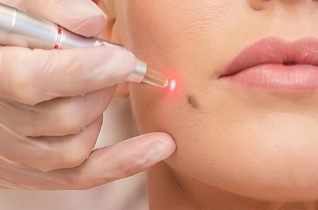
Laser treatment for birthmarks varies depending on the type and location of the birthmark. Patients must understand that Laser treatment of birthmarks is not always predictable and results may vary. In some cases, Laser may reduce the appearance of the birthmark, while at other times, the response may be limited.
If, after an in-clinic consultation and assessment, Laser treatment is considered, surgical treatment may also be discussed as a secondary option if the Laser is ineffective or healing does not progress as anticipated.
Vascular Birthmarks
Vascular birthmarks can be particularly challenging to treat. The skin and tissue are usually different from the surrounding skin, regardless of where they are located. This difference may affect the response of birthmarks to laser treatment.
Vascular birthmarks can also carry an increased risk of poor scarring outcomes, particularly when they are large or located on areas such as the limbs, upper lip or chest wall.
Pigmented Birthmarks
Pigmented birthmarks can vary in size and pigment depth. Raised pigmented birthmarks may sometimes be suitable for laser treatment. In these instances, the Laser removes the raised portion of the birthmark.
The pigment that sits deeper in the skin, however, cannot be treated with a laser. Any attempts to treat deeper pigment may increase the risk of poor healing or scarring.
The location of the birthmark is also a vital consideration. Some areas of the body, such as the chest wall, lower limbs and back of the shoulders, are more prone to visible scarring. There is also a higher likelihood of raised scar tissue forming, such as keloid or hypertrophic scars.
Laser treatment is generally not considered suitable for pigmented birthmarks that sit beneath the skin’s surface.
Post-Procedure Care
After Laser treatment, the treated area may appear slightly swollen and red and the skin can feel tender. Usually, a small scab forms as the skin heals.
Keep the scab dry and allow it to form off naturally. Picking or disturbing the scab can increase the risk of scarring.
You may be provided with a topical cream to support the healing process of your skin.
You will also be given verbal and written instructions on after-care.
Surgical Intervention
Surgery is considered for some birthmarks, particularly when they extend deeper within the skin or when laser treatment is not appropriate. If surgical removal is recommended, we may refer the patient to a Plastic and Reconstructive Surgeon.
NB: Surgical removal will not always be recommended. The decision to proceed with surgery depends on the type of birthmark, its location and the potential risk of scarring.
Treatment Recovery
Your recovery from birthmark treatment will depend on the type of treatment performed, the type of birthmark and its size and location.
Laser treatment typically involves a controlled injury to the skin. This can result in swelling, skin tenderness, redness and scab formation while the area heals.
Recovery from surgical removal can involve stitches and wound dressings while the area heals.
Healing from birthmark treatment depends on the type of treatment, varies from person to person and is also influenced by the body’s natural healing response.
Cost of Treatment
The cost of birthmark removal treatment depends on factors such as the type of birthmark, its size and location and the recommended treatment method.
