

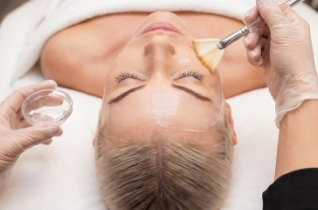
Chemical Peels are enriched with antioxidants. They rejuvenate the skin by removing damaged outer layers, helping reduce oxidative stress and protect mitochondria—the ‘powerhouses of the cell’—from free radical damage.
Mitochondria produce ATP, which is essential for cell renewal and repair. By protecting these, peels help maintain the skin’s energy supply. This helps reduce the signs of ageing, such as uneven pigmentation, fine lines and wrinkles.
Types of Peels
Different types of peels are available, depending on the objectives. Lighter peels boast significantly less downtime; however, deeper peels may offer more dramatic results but require longer recovery.
Light Chemical Peel
A light Chemical Peel removes the outer layer of skin (epidermis). It is used to treat acne, uneven skin tone, fine wrinkles and dryness.
Medium Chemical Peel
A medium Chemical Peel removes skin cells from the epidermis and portions of the upper part of the middle layer of skin (dermis). It is used to treat acne scars, wrinkles and uneven skin tone.
Deep Chemical Peel
A deep Chemical Peel removes skin cells even deeper. It may be considered for addressing deeper wrinkles, scars, or precancerous growths.
NB: Chemical Peels can’t remove deep wrinkles or scars or tighten sagging skin.
Number of Treatments Required
A noticeable improvement in your skin texture and tone, along with a reduction in fine wrinkles and skin blemishes, can be seen following your first treatment. A ‘good skin health’practice is to schedule regular Chemical Peels based on your own observation of your skin’s health.
Procedure Time
We allow 45 minutes for our skin peel treatment. This includes time to complete your patient registration form and discuss your aesthetic goals.
Comfort during the Procedure
Chemical peels are usually well tolerated and a topical anaesthetic is not required. Some warmth can be felt during treatment, which may remain for an hour or so afterwards, depending on the type of chemical peel. Occasionally, we may use a fanning device to help cool the area, but this is not often required.
Downtime, Side-Effects & Risks
The strength of your peel typically determines the downtime required. Less invasive peels will result in minimal skin redness, warmth and swelling, while stronger peels can cause prolonged redness and swelling. Your skin may also shed for the following week or two.
Rare risks can include:
- Scarring
- Infection
- Lightning (hypopigmentation) or darkening (hyperpigmentation) of the skin
- Gkin crusting or blistering
- Granuloma formation
As part of your post-treatment care plan, you’ll be given verbal and written after-care instructions.
