What Causes Gynaecomastia?
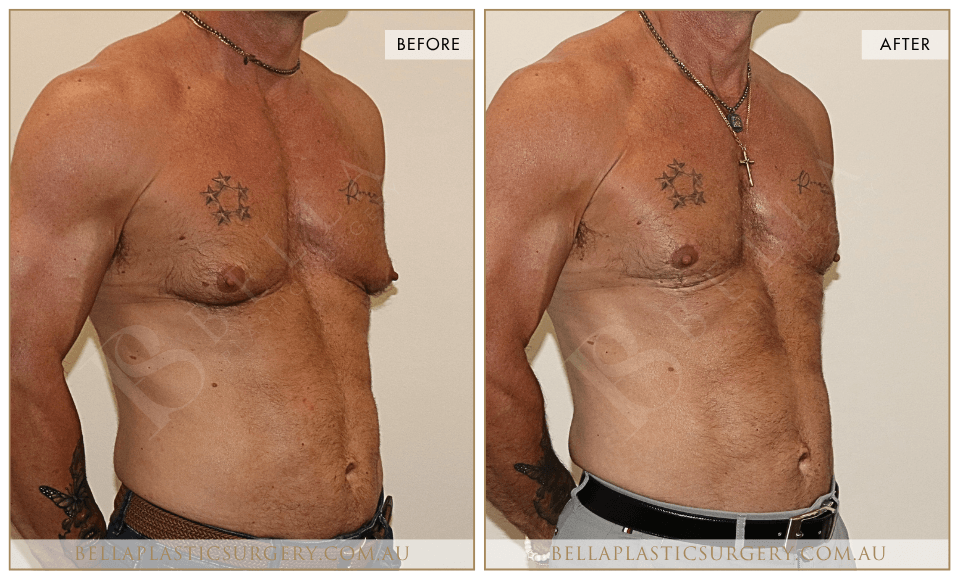
Gynaecomastia is caused by the abnormal development of breast tissue, excess fatty tissue or a combination of the two. Various factors cause the condition, such as hormonal imbalances, steroid use, endocrine disorders, obesity or side effects of certain medications. To determine what has caused your gynaecomastia and assess the severity, you will need an Initial Consultation and thorough examination with Dr Dona. This will then determine your surgical plan for the best results.
Breast Reduction for Men: Suitable Candidates
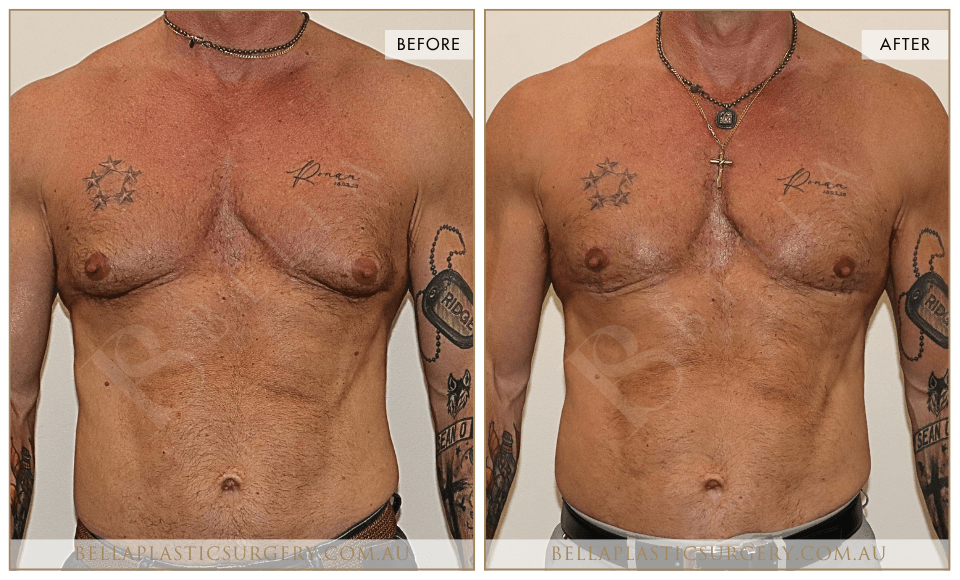
Suitable candidates for Gynaecomastia removal must be:
- In good physical health
- In good mental health and be emotionally prepared for realistic surgical outcomes
- A non-smoker or willing to give up smoking
- Healthy body weight
Gynaecomastia Reduction: Surgical Techniques
There are a few surgical techniques for gynaecomastia removal, depending on the type of tissue involved:
- When only fatty tissue is involved, liposuction may be the best option.
- When glandular tissue is mostly involved, or the gynaecomastia is more severe, surgical excision may be the best option.
- If any excess skin is involved, the amount of excess skin will dictate the surgical pattern required to address this.
patients have both fatty and glandular tissue requiring both liposuction and surgical excision.
Usually, the surgery is performed as a day hospital procedure – and you can go home on the day of the surgery. However, you may require an overnight hospital stay for more extensive corrective surgery.
Liposuction/Liposculpture
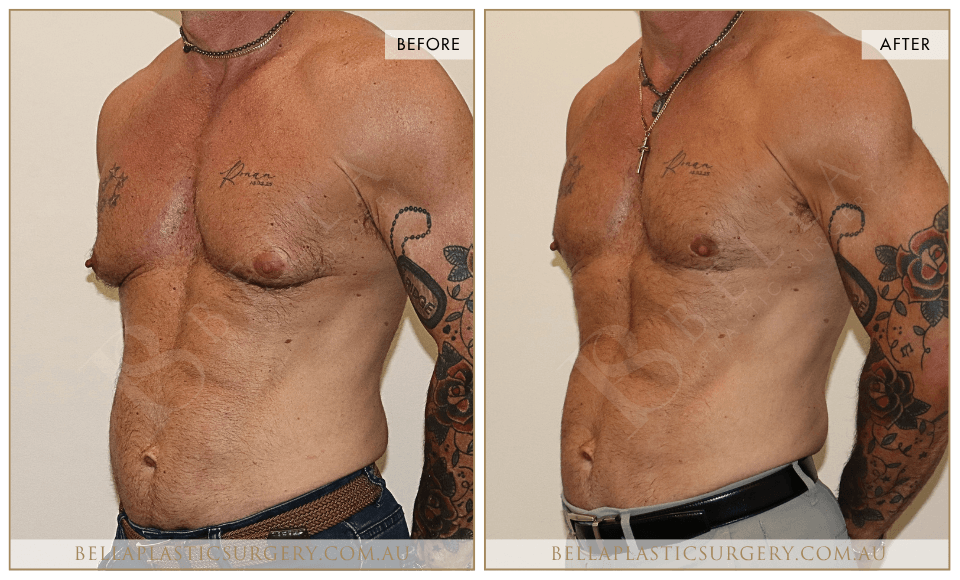
If you only have excess fat causing your gynaecomastia, Dr Dona may recommend liposuction. During this procedure, he will create one or two small incisions (approximately 5mm long) near the treatment area. He will then insert a cannula through these incisions to help break up the fatty tissue and suction it away. The result is a flat chest that appears more masculine – without softness or breast prominence.
NB: If a patient does not have excess skin, and the gynaecomastia is primarily fatty tissue, then liposuction is typically the first choice for treatment.
Liposuction/Liposculpture
If you only have excess fat causing your gynaecomastia, Dr Dona may recommend liposuction. During this procedure, he will create one or two small incisions (approximately 5mm long) near the treatment area. He will then insert a cannula through these incisions to help break up the fatty tissue and suction it away. The result is a flat chest that appears more masculine – without softness or breast prominence.
NB: If a patient does not have excess skin, and the gynaecomastia is primarily fatty tissue, then liposuction is typically the first choice for treatment.
Gynaecomastia (Male Breast Reduction) Surgery Recovery
Immediately After Surgery
1 to 2 Weeks
2 to 4 Weeks
4 to 6 Weeks
3 to 6 Months

Dr Eddy Dona is a highly experienced specialist plastic surgeon who has dedicated much of his profession to Gynaecomastia (Male Breast) Reduction.
When considering Gynaecomastia (Male Breast) Reduction, it’s vital you consider your options and do your research carefully. Not all surgeons are equal – or have the same level of expertise and experience.
Gynaecomastia/Male Breast Reduction: Potential Risks and Complications
All surgery carries risks. To learn about general surgical risks, please go here.
Male breast reduction surgery, as with any surgery, does carry the potential for risks and complications. Although complications are relatively rare, you must be aware of them. Complications include:
- Asymmetry: No human body is symmetrical, so achieving perfect symmetry is impossible. However, if your surgery results in significant asymmetry, this may warrant further surgery.
- Bleeding: It’s possible to experience excessive bleeding during or after your surgery despite extensive precautions. Sometimes, we may need to perform additional procedures if significant bleeding occurs.
- Haematoma: This is a collection of blood beneath the skin, leading to swelling, bruising and pain, and can occur after surgery. In such incidences, the haematoma will need to be drained.
- Infection: Although surgical site infections are uncommon, they can occur. They are typically managed with antibiotic treatment.
- Loss of nipple sensation: Permanent changes in nipple sensation can occur, although uncommon. However, severe gynaecomastia cases requiring a nipple graft will always result in a loss of nipple sensation.
- Seroma: This is a local buildup of clear fluid that potentially causes swelling. Seromas may develop after surgery. If they do, they will require drainage.
Gynaecomastia/Male Breast Reduction: Potential Risks and Complications
All surgery carries risks. To learn about general surgical risks, please go here.
Male breast reduction surgery, as with any surgery, does carry the potential for risks and complications. Although complications are relatively rare, you must be aware of them. Complications include:
- Asymmetry: No human body is symmetrical, so achieving perfect symmetry is impossible. However, if your surgery results in significant asymmetry, this may warrant further surgery.
- Bleeding: It’s possible to experience excessive bleeding during or after your surgery despite extensive precautions. Sometimes, we may need to perform additional procedures if significant bleeding occurs.
- Haematoma: This is a collection of blood beneath the skin, leading to swelling, bruising and pain, and can occur after surgery. In such incidences, the haematoma will need to be drained.
- Infection: Although surgical site infections are uncommon, they can occur. They are typically managed with antibiotic treatment.
- Loss of nipple sensation: Permanent changes in nipple sensation can occur, although uncommon. However, severe gynaecomastia cases requiring a nipple graft will always result in a loss of nipple sensation.
- Seroma: This is a local buildup of clear fluid that potentially causes swelling. Seromas may develop after surgery. If they do, they will require drainage.
During your consultation, you can have your gynaecomastia assessed. You’ll also receive the appropriate surgical treatment plan and a detailed breakdown of the anticipated costs, including surgical fees, anaesthesia, facility fees, and other necessary expenses.