
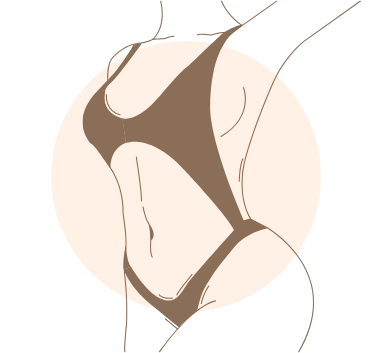
What is an abdominoplasty?
Abdominoplasty surgery involves removing excess skin and fat from the abdominal area, and in some cases, restoring weakened or separated muscles. The procedure addresses bodily changes that individuals can experience from massive weight loss, pregnancy, and natural ageing. Our skin naturally stretches to accommodate weight gain and pregnancy. However, that elasticity will reduce over time, especially the longer the skin must stretch, meaning it may not revert to its original place once the weight is lost. That can leave patients with excess skin fat pockets that will not go away despite a healthy diet and regular exercise. Abdominoplasty can be combined with other surgeries such as a belt lipectomy or breast augmentation mammoplasty.
What can abdominoplasty achieve for you?
For many patients, an abdominoplasty can move them towards their body goals. The procedure can provide the following benefits:
- Excise loose and excess skin
- Remove excess fat deposits
- Alter the contours of the abdomen
- Repair abdominal hernias
- Mend and correct separated or weakened abdominal muscles, commonly caused by pregnancy
- Address issues with skin texture and irritation
All these possible outcomes are depended on individual patient factors which you will have to discuss with Dr Starr.
Abdominoplasty – Tummy Tuck Before and After Photos
Am I a suitable candidate?
Abdominoplasty might be suitable for a patient who can meet the following criteria:
- Do not plan to have any more children
- Have stretched excess skin around the abdominal area
- Have pockets of fat that have not diminished despite weight loss or exercise
- Have reached or are close to reaching your goal weight and can maintain a healthy diet with regular exercise
- Have a hernia that needs repairing
- Have separated or weakened abdominal muscles
- Have realistic, achievable surgical goals
Consultation with Dr Matt Starr
You will need to consult with Plastic Surgeon Dr Matt Starr before proceeding with any surgery to determine your suitability and the appropriate approach to achieving your goals. You will discuss your reasons for wanting abdominoplasty surgery, your expectations, and what you hope to accomplish with such a procedure. Dr Starr will ask you to disclose your medical history, current health and lifestyle routines, any future pregnancy plans, and any medications or previous surgeries you may have undergone.
The procedure
Abdominoplasty is performed under general or local anaesthetic, usually as a day procedure and may require an overnight stay in the hospital to monitor your healing. Liposuction may be needed depending on the amount of excess fat in the abdominal area, and if so, it is performed before any incision is made. It may be performed via injection or cannula. If the patient chooses, the unwanted fat can be redistributed elsewhere and combined with other procedures, such as a belt lipectomy or breast fat grafting.
Mini Abdominoplasty
This abdominoplasty technique involves a small incision above the pubic hairline where the abdominal skin is pulled downwards, and the excess skin is trimmed. A mini abdominoplasty does not include any muscle tightening or repairing.
Full Abdominoplasty
A full abdominoplasty requires an incision from hip to hip above the pubic hairline and an additional incision around the belly button. Any separated or weakened muscles are repaired using permanent stitches to help avoid future issues with the abdominal muscles. Excess skin is then trimmed as the skin is pulled downwards towards the pubic hairline.
Recovery & aftercare
Immediately after your procedure, you may experience dizziness, pain, swelling, and bruising, which are typical postoperative symptoms. You may be required to stay in hospital for one to two nights. Pain medication may be prescribed to manage your discomfort. You will also be fitted with a compression garment to wear for several weeks, helping to support your new abdomen contours and reduce swelling and bruising. Drains will also be inserted in the treatment area to help prevent excess fluid or blood from accumulating and removed after several days. Recovery time can vary for every patient depending on many factors, but most patients recover within six weeks.
Aftercare and recovery plans can include:
- Take adequate time off work – generally, one week of rest and recovery is needed before patients return to light duties and driving
- Avoid any vigorous activity for at least four weeks
- Wear your prescribed compression garments
- Avoid bending down
- Take all prescribed medications and creams
- Avoid any physical movements that may strain your abdomen area
- Attend all post-surgical appointments to monitor your healing
- Maintain hydration and a healthy diet to support your body’s natural healing
What are the risks or complications associated with abdominoplasty surgery?
There are always risks or complications associated with any medical or cosmetic procedure patients may undergo. Associated risks and complications include:
- Infection
- Skin discolouration
- Anaesthesia complications
- Poor scarring
- Constrained movement
- Numbness and changes in skin sensation
- Haematoma
- Fluid accumulation
- Poor scarring
- Poor wound healing